
Incorporating Team Building Exercises into Your Corporate Retreat
A corporate retreat with team-building exercises can either strengthen collaboration or waste three hours on trust falls nobody wanted. The difference comes down to activity selection and execution. Generic icebreakers kill engagement—teams mentally check out when activities feel forced or disconnected from actual work dynamics. At The Offsite Co., we've organized retreats where team-building drives measurable improvements in cross-departmental communication.
Your Retreat Needs More Than Meetings—Here’s Why
Retreats without structured team-building default to the same dynamics that exist in the office—the same people talk, the same silos persist, and the same collaboration patterns repeat. Strategic team-building exercises disrupt these patterns by forcing interaction outside normal work contexts. When an engineering team and sales team complete an escape room challenge together, they build rapport that carries over to cross-functional projects. When leadership participates in a business simulation requiring consensus under time pressure, they experience the communication breakdowns their teams face daily, allowing them to better empathize.
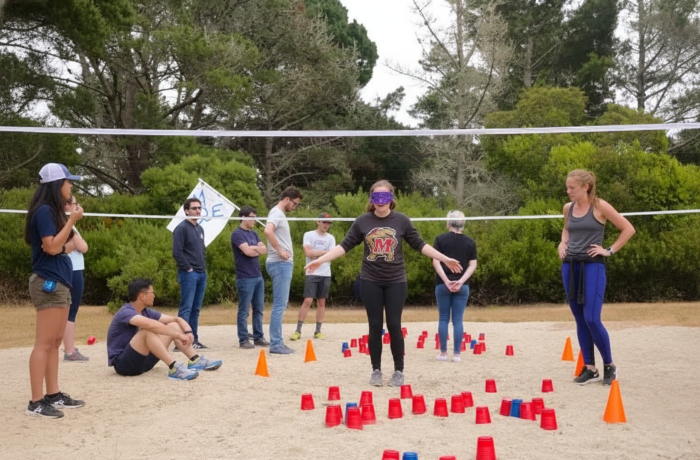
The value isn't in "fun"—it's in creating scenarios where teams practice skills they need at work but rarely develop through normal tasks. Good team-building exercises set the tone for stronger communication, trust, and productivity long after the retreat ends.
Choosing the Right Activities for Your Team
Team-building activities should map to specific organizational challenges, not just fill agenda time. The Offsite Co. designs exercises based on retreat goals:
➔ Innovation challenges: Rapid prototyping sessions where teams build functional prototypes in 90 minutes, design sprints tackling real company problems, or Shark Tank-style pitch competitions with leadership as judges. These work for teams launching new products or entering new markets.
➔ Alignment exercises: Business simulations replicating your company's decision-making environment, crisis management scenarios requiring cross-functional coordination, or strategy workshops where teams build consensus on contentious issues. These work for leadership teams or organizations undergoing change.
➔ Culture reinforcement: Volunteer projects aligned with company values, cooking competitions emphasizing collaboration, or shared experiences (group music-making, improv workshops) that emphasize core behaviors. These work for companies prioritizing culture or onboarding new team members.
A retreat without intentional team-building defaults to happy hour conversations among people who already know each other, whereas strategic exercises force interaction across normal boundaries.
Team-Building Activities That Actually Drive Results
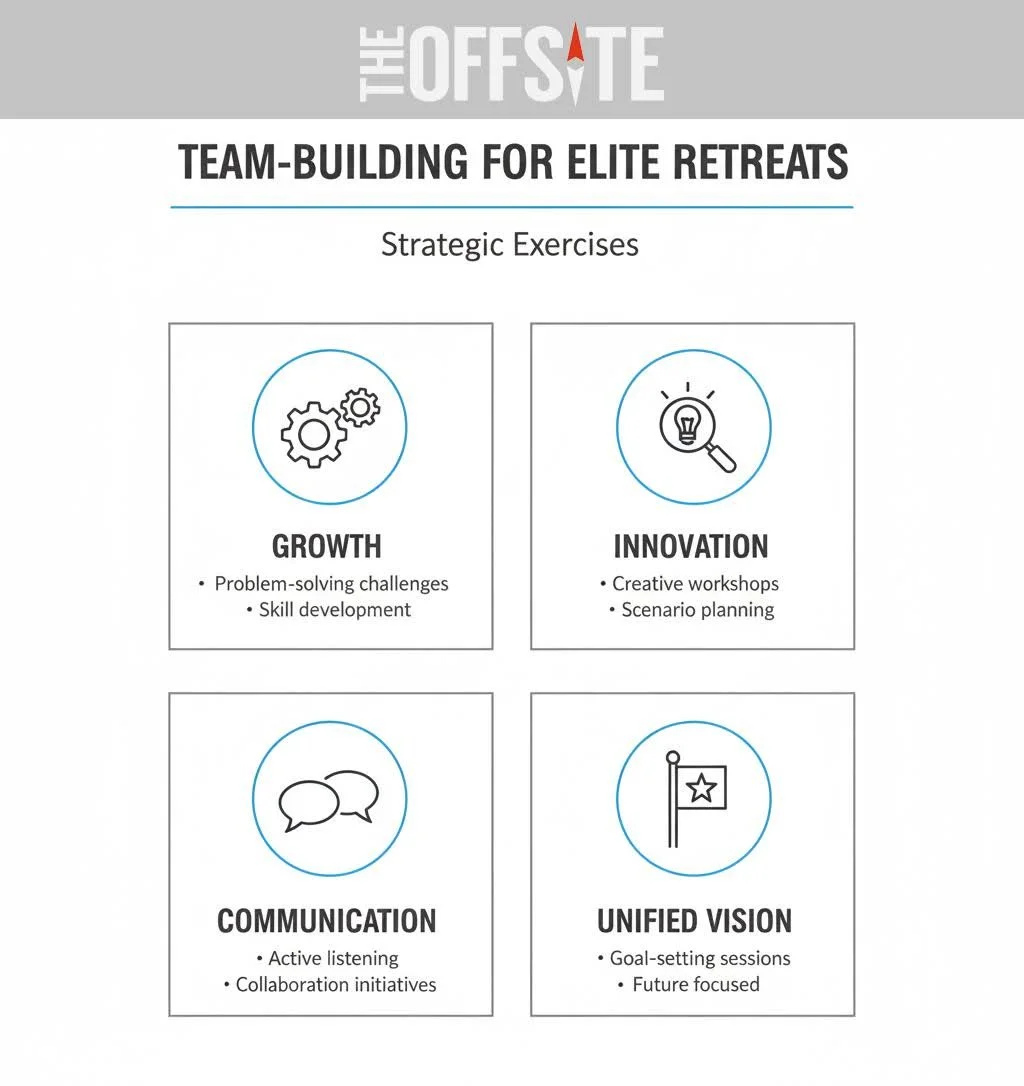
From creative challenges to strategy-based problem-solving, these exercises are designed to boost collaboration, spark new ideas, and build trust without making people cringe. Here’s a lineup of activities that actually get results.
For Creativity & Innovation
Design sprints: Teams tackle actual company problems through rapid prototyping—creating functional mockups or detailed plans within tight timeframes. More valuable than hypothetical exercises because outputs sometimes become real projects.
Creative constraints challenges: Teams solve problems with artificial limitations (limited materials, tight budgets, impossible timelines) that force unconventional thinking. Example: redesign your onboarding process using only tools available in 1995.
For Communication & Trust
Escape room challenges: Real escape rooms accommodate 6-10 people per room (book multiple rooms for larger teams). Custom puzzle-solving activities work better for groups over 30. These expose communication breakdowns under time pressure—teams that talk over each other or ignore quieter members fail to escape. The Offsite Co. debriefs afterward, connecting escape room dynamics to workplace communication patterns.
Role-swapping exercises: Team members tackle challenges from other departments' perspectives. Example: engineers present a product pitch, sales teams solve a technical architecture problem, finance teams design a marketing campaign. Works best when exercises mirror real cross-functional friction points rather than generic scenarios.
For Collaboration & Strategy
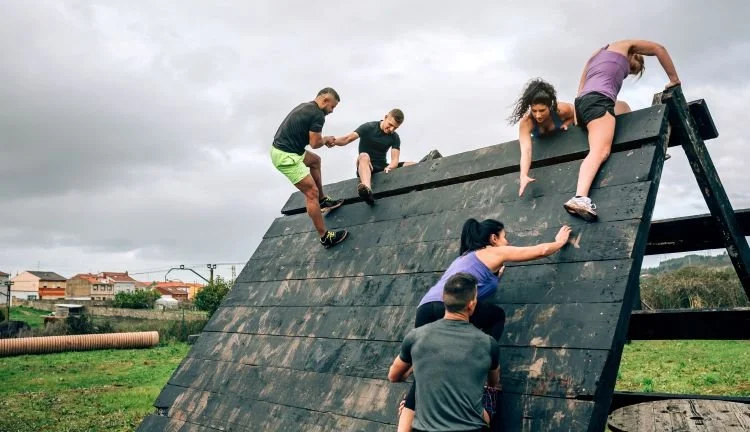
Outdoor problem-solving missions: Ropes courses require 2-4 hours and accommodate groups up to 50 (larger groups rotate through stations). Scavenger hunts work for urban or resort settings—teams solve clues requiring collaboration across functional expertise. These work best when physical challenges match team fitness levels (not everyone wants to climb 30-foot poles).
Business simulations: Teams manage simulated companies facing realistic crises—supply chain disruptions, PR disasters, competitive threats. The Offsite Co. customizes simulations to mirror your industry and organizational structure, so lessons transfer directly to work. More effective than generic exercises because teams recognize scenarios from actual experience.
For Pure Fun & Culture-Building
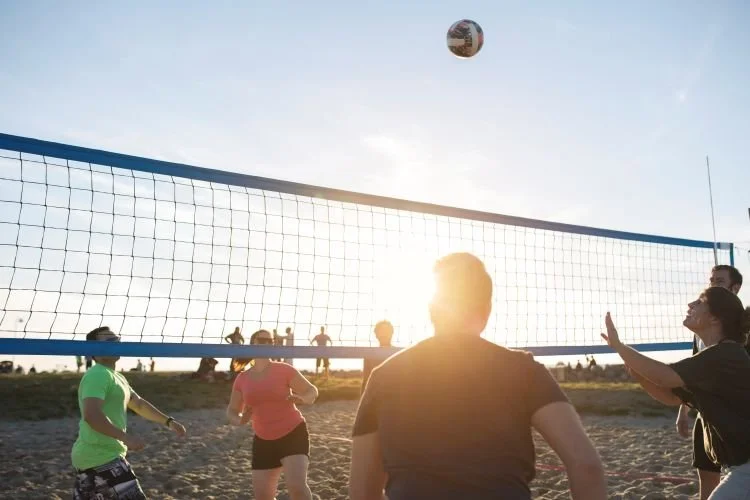
Competitive games: Trivia competitions themed around company history or industry knowledge, scavenger hunts incorporating company values, or sports tournaments (kickball, volleyball, cornhole for mixed fitness levels). Competition works when stakes are low and teams are randomized to prevent cliques from dominating.
Shared experiences: Cooking competitions where teams create dishes from mystery ingredients, improv workshops teaching "yes, and" principles that apply to collaboration, or group music-making (drum circles, choir sessions) requiring coordination. These work because they're novel enough that office hierarchies disappear—the CEO and intern are equally bad at improv.
Don’t Make Your Team Suffer—Fix These Team-Building Mistakes
The “Forced Fun” Problem
Activities requiring vulnerability (trust falls, personal sharing exercises, physical contact) make some people uncomfortable. The Offsite Co. offers activity tiers—high-energy options for extroverts, low-key alternatives for introverts, opt-out paths that don't single people out. Example: during a ropes course, teams can choose ground-based problem-solving challenges instead of climbing. Engagement increases when participation feels chosen rather than mandatory.
Ignoring Inclusivity
Physical activities exclude team members with mobility limitations, injuries, or health conditions. High-energy, extrovert-focused exercises alienate introverts. Our experts design parallel tracks—an outdoor scavenger hunt runs simultaneously with an indoor strategy game, both contributing to the same outcome. Teams choose paths matching their preferences and abilities. This approach prevents the scenario where someone sits out watching others climb walls, feeling excluded from team bonding.
Not Tying It Back to Work
Team-building activities without structured reflection are just entertainment. The Offsite Co. facilitates 15-30 minute debriefs after exercises, explicitly connecting activity dynamics to workplace behavior.
Example: after an escape room where one person dominated decision-making and the team failed to escape, we discuss how similar patterns show up in meetings. Teams identify 2-3 concrete behavioral changes to implement back at work. Without debriefs, teams enjoy activities but don't transfer lessons to daily collaboration.
Overloading the Schedule
Back-to-back team-building activities exhaust teams. At The Offsite Co., we design schedules with 60-70% structured time and 30-40% unstructured breaks. Unstructured time (meals, evening hangouts, morning coffee) is where relationship-building happens organically—people discuss work challenges, share context, and build rapport without facilitation. Overscheduled retreats tend to feel like work rather than breaks from normal routines. If you don’t build-in downtime, people will burn out fast.
The Team-Building Upgrade You’ve Been Looking For
From team-building activities to full-scale corporate retreats and offsites, we handle it all. Planning, logistics, facilitation—you name it. You don’t have to stress about keeping things on schedule or making sure people engage. We design and execute experiences that feel effortless for you and meaningful for your team, from the first idea to the final wrap-up.
Tailored Experiences, Zero Awkwardness
Team-building should feel like a natural extension of your retreat, not a mandatory game session. That’s why every experience we design is built around what your team actually needs. Here’s what we handle:
➔ Activity design: We select exercises based on specific challenges—cross-departmental silos, communication breakdowns, low engagement, cultural misalignment. Rather than default to ropes courses or escape rooms, we choose activities that address root issues. For a tech company struggling with product-engineering friction, we designed a simulation where engineers pitched features to product managers under time pressure, forcing role empathy.
➔ Logistics coordination: Booking venues for activities, coordinating transportation to off-site locations, managing timing across multi-track schedules, handling dietary restrictions for cooking competitions, arranging equipment for outdoor challenges. Teams show up to activities ready to go rather than waiting 30 minutes while facilitators set up.
➔ Professional facilitation: Our facilitators run activities and lead structured debriefs connecting exercise dynamics to workplace behavior. This converts team-building from entertainment into development—teams leave with concrete behavioral commitments rather than just good memories.
➔ Inclusivity planning: We design parallel activity tracks accommodating different energy levels, physical abilities, and personality types. Introverts aren't forced into high-energy competitions; team members with mobility limitations participate fully through alternative challenge paths.
Companies That Work With Us, Stay With Us
97% of companies who trusted us in 2024 are returning in 2025. Why? Because we get it. Team-building should be something your team remembers, talks about, and actually benefits from long after the retreat is over.
The best experiences aren’t random—they’re intentional, well-designed, and aligned with your team’s culture and goals. When team-building is done right, you’ll see the difference in how your team communicates, collaborates, and connects. Let’s make that happen.
FAQs
What are the best types of activities for a corporate retreat with team-building exercises?
Activity selection depends on retreat goals and team composition. Creative teams benefit from innovation challenges (Shark Tank pitches, design sprints, rapid prototyping). Problem-solving focused teams work well with escape rooms, business simulations, or crisis management exercises. Culture-building teams prefer shared experiences (cooking competitions, volunteer projects, improv workshops). Outdoor-oriented teams engage with ropes courses, scavenger hunts, or survival challenges. The Offsite Co. matches activities to organizational needs rather than defaulting to generic options—a sales team struggling with collaboration receives different exercises than an engineering team working on innovation.
What's the ideal mix of work vs. team-building at a retreat?
Most successful retreats allocate 60-70% of time to structured work (strategy sessions, planning, presentations) and 30-40% to team-building and unstructured time. This balance maintains productivity while preventing burnout. All team-building with no work feels like a vacation without outcomes. All work with no team-building misses the relationship-building that retreats enable. The Offsite Co. designs schedules with morning work sessions when energy is high, afternoon team-building when attention wanes, and evening unstructured time for organic conversations.
What are some team-building activities that don't feel forced?
Activities feel natural when they map to real work challenges rather than generic bonding exercises. Business simulations replicating your decision-making environment, strategy workshops tackling actual company problems, or creative competitions solving real challenges feel purposeful. Cooking competitions, improv workshops, and outdoor adventures work when participation is voluntary and alternatives exist. Trust falls, forced personal sharing, and mandatory "fun facts" icebreakers create discomfort.
How do you ensure team-building activities are inclusive?
The Offsite Co. designs parallel activity tracks accommodating different abilities, energy levels, and personality preferences. Physical challenges like ropes courses run simultaneously with ground-based problem-solving alternatives. High-energy competitions pair with low-key strategy games. Both tracks contribute to shared outcomes so no one feels excluded. We survey teams pre-retreat about mobility limitations, health conditions, or strong activity preferences, then design options allowing full participation regardless of physical ability or personality type.
Do you just run team-building activities, or do you plan full retreats?
The Offsite Co. handles complete retreat planning—venue selection, transportation coordination, agenda design, team-building activity curation, meal planning, onsite facilitation, and post-retreat follow-up. We manage logistics so internal teams focus on retreat content rather than operational details. Whether you need standalone team-building activities inserted into an existing retreat or full-service retreat planning from initial concept to final execution, we customize support to match your needs.
How do we get started planning a retreat with team-building exercises?
Start with a consultation where we discuss retreat goals, team composition, budget parameters, and timeline. The Offsite Co. proposes venue options, designs a preliminary agenda balancing work and team-building, and recommends activities addressing your specific organizational challenges. After approval, we handle all logistics—venue booking, activity coordination, facilitator scheduling, and onsite management. Teams arrive to fully planned retreats rather than managing details themselves.