
Team Building Retreat Ideas: From Indoor to Outdoor Experiences
The best team-building retreat ideas don't just fill time—they create the conditions for real connection, renewed focus, and breakthrough thinking. Whether you're planning a one-day escape or a multi-day experience, the magic is in the mix: space to think, time to connect, and moments that spark genuine growth.
The challenge is designing a retreat that feels intentional, not generic. That's where The Offsite comes in. We've planned hundreds of team retreats and know how to balance strategy with connection and high-energy activities with meaningful downtime. From venue sourcing to custom activity design to on-site coordination, we handle everything so you can focus on your team. Book a free consultation and we'll design a retreat that works for your team.

Build Stronger Teams With These 12 Team-Building Retreat Ideas
Team-building retreat ideas work best when they align with your team’s energy, goals, and environment. The right mix of indoor and outdoor experiences creates space for collaboration, creativity, and connection. From hands-on workshops to beachside brainstorms, the best activities meet people where they are—socially, mentally, and creatively. Whether you’re aiming for breakthrough ideas or just a better team rhythm, these options are easy to tailor to your group and setting.
Outdoor Retreat Activities
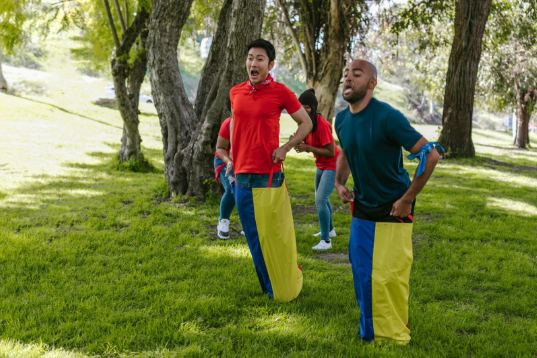
1. Field Olympics
Mini competitions across a park or field—relay races, tug of war, obstacle courses, sack races. Teams rotate through 6–8 stations with points tracked on a live leaderboard. Add custom challenges related to your company culture or inside jokes for extra engagement. Winners get bragging rights, custom medals, or silly prizes.
Low barrier to entry, high energy output. Works across fitness levels since most events are about coordination and teamwork rather than pure athleticism. The friendly competition breaks down formality fast.
Works best for: High-energy teams, groups needing to break through formality, 20–80 people
Time needed: 2–3 hours
2. Guided Hike with Rotating Discussion Pods
Hit the trail together, then break into small groups (4–6 people) with rotating prompts at different scenic stops. Topics range from work challenges ("What's one decision you're stuck on?") to personal growth ("What's a skill you want to build this year?") to company vision. Groups rotate every 20–30 minutes so everyone connects with different teammates.
The combination of movement, nature, and structured conversation creates conditions for honest dialogue that rarely happens in conference rooms. People open up differently when they're walking side by side rather than sitting face-to-face.
Works best for: Leadership development, culture alignment, teams comfortable with vulnerability
Time needed: 3–4 hours including travel
3. Beach Strategy Day
Set up camp at the beach with large umbrellas, portable tables, whiteboards, and catered lunch. Alternate between 45-minute focused strategy sprints and 30-minute breaks for swimming, beach volleyball, or just sitting in the sun. The relaxed setting lowers defenses and makes space for creative thinking.
Bring waterproof notebooks, sunscreen, and backup indoor location in case weather shifts. The key is balancing real work with real downtime—this isn't just a beach day, but it's also not just work with sand in the background.
Works best for: Creative teams, planning sessions that benefit from relaxed atmosphere, groups of 15–50
Time needed: Half day to full day
4. Outdoor Escape Challenge
Escape room mechanics spread across a park or urban green space—teams solve riddles, complete physical challenges, decode clues, and race the clock. Mobile apps track progress, provide hints, and display live leaderboards. Challenges might include finding hidden objects, completing team tasks, or solving puzzles that require collaboration.
Unlike traditional escape rooms, this format accommodates larger groups (50+) by running multiple teams simultaneously. The outdoor setting adds energy and eliminates the claustrophobia some people feel in enclosed escape rooms.
Works best for: Problem-solvers, competitive groups, post-launch celebrations, 20–100 people
Time needed: 90 minutes–2 hours
5. Garden Picnic Innovation Jam
Catered lunch in a garden, park, or outdoor courtyard paired with open-format brainstorming. Bring portable whiteboards, flip charts, sticky notes, and thought-starter prompts. Teams pitch ideas, vote on favorites, sketch rough concepts, and present back to the group. No wrong answers, no immediate execution pressure—just idea generation.
The casual setting encourages candid thinking and makes space for voices that don't always speak up in formal meetings. Works especially well for product roadmap planning, marketing campaigns, or culture initiatives.
Works best for: Product teams, creative strategy sessions, casual idea generation, 15–60 people
Time needed: 2–3 hours
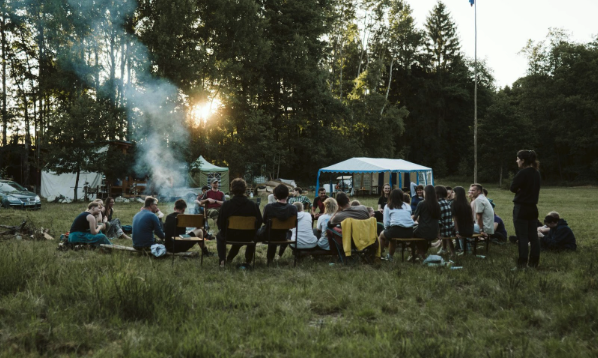
6. Campfire Reflection Circle
End the day gathered around a fire pit with guided reflection prompts: What surprised you today? What insight are you taking away? What's one thing you want to commit to moving forward? Keep groups small (6–10 people max) so everyone has space to share. Optional: include s'mores, acoustic music, or stargazing afterward.
The intimacy of firelight and small groups creates psychological safety for vulnerability. This format consistently gets cited as a retreat highlight—it gives people permission to reflect out loud and be heard without judgment.
Works best for: Closing rituals, building trust, multi-day retreats, leadership teams
Time needed: 60–90 minutes
Indoor Experiences
7. Build-A-Startup Challenge
Teams create fictional companies from scratch—product concept, target customer, business model, competitive positioning, pitch deck, and brand identity. Give teams 3–4 hours to build everything, then present to "investors" (executives, board members, or external judges) who provide feedback and select a winner. Add constraints or curveballs ("your product must use AI" or "your customer is Gen Z") to make it interesting.
This activity reveals how people think strategically, communicate under pressure, and collaborate across functions. The fictional framing removes ego and politics—everyone can participate freely without defending real decisions.
Works best for: Cross-functional collaboration, strategic thinking, teams that don't usually work together, 20–60 people
Time needed: Half day (4–5 hours including presentations)
8. Culinary Cook-Off
Teams receive mystery ingredient baskets (à la Chopped) and compete to create the best dish under time pressure. Provide kitchen access, basic pantry staples, and 60–90 minutes to cook. Judges—could be chefs, execs, or peer teams—score on taste, creativity, teamwork, and presentation. Everyone eats together afterward and celebrates the winners.
Food brings people together, and the time pressure creates natural collaboration. You'll see leadership dynamics, creative problem-solving, and a lot of laughter. Even non-cooks get involved—someone preps, someone plates, and someone presents.
Works best for: Breaking down hierarchy, hands-on problem-solving, creating shared memories, 15–50 people
Time needed: 2.5–3 hours including eating
9. Leadership Roundtables
Small facilitated groups (8–12 people) tackle meaty topics like decision-making frameworks, handling tough feedback, navigating organizational change, or building influence without authority. Facilitators guide discussion with prompts and keep conversations on track. Rotate topics or mix groups every 45–60 minutes so people get multiple perspectives.
The small group format encourages candid conversation and peer learning. Junior leaders hear how senior leaders handled similar challenges. Cross-functional groups surface blind spots and build empathy for different roles.
Works best for: Leadership development, inter-level connection, surfacing wisdom across the org, 20–60 people
Time needed: 2–4 hours depending on rotation structure
10. Creative Workshop: Improv, Painting, or Music
Hire a professional facilitator to lead improv games, collaborative painting, or group drumming. The goal isn't producing perfect output—it's building presence, emotional agility, and comfort with creative risk-taking. Improv teaches "yes, and" thinking. Painting encourages self-expression without judgment. Drumming creates literal rhythm and coordination.
These workshops work because they bypass intellectual defenses. People bond through shared vulnerability and play. It's especially powerful for teams stuck in rigid thinking or afraid of failure.
Works best for: Building emotional agility, teams stuck in rigid patterns, creating bonding through play, 15–50 people
Time needed: 90 minutes–2 hours
11. Personal Storytelling Circle
Each person shares a 3–5 minute story about a pivotal challenge, growth moment, or career turning point. The facilitator provides structure, prompts, and time limits. Rules: no interruptions, no advice-giving, just listening and witnessing. After everyone shares, open the floor for reflections on themes that emerged.
This format builds empathy faster than almost any other activity. People see each other as humans with complex histories, not just job titles. It works especially well for newly formed teams or groups that have worked together for years but never gone deeper than surface-level relationships.
Works best for: Building empathy and trust, newly formed teams, deeper connection beyond work roles, 10–30 people
Time needed: 2–3 hours depending on group size
12. Game Lounge Drop-In
Set up a dedicated space with card games (Uno, Cards Against Humanity, poker), a Nintendo Switch with multiplayer games, jigsaw puzzles, chess boards, and classic board games (Codenames, Settlers of Catan). Keep it open throughout the retreat—no scheduled sessions, just availability during breaks, after dinner, or whenever people want low-key connection.
This gives introverts a way to bond without forced conversation. It fills awkward downtime organically. And it often becomes the spot where unexpected friendships form—the CFO and junior designer who bond over Mario Kart, the quiet engineer who crushes everyone at chess.
Works best for: Giving introverts low-pressure connection points, filling downtime organically, multi-day retreats
Time needed: Ongoing availability throughout retreat
How to Structure a Retreat That Works
Most retreats fail because they're either over-programmed or under-structured. The best ones follow a rhythm that mirrors how people actually think, work, and connect.
Day 1: Transition and Alignment
Start slow. People arrive carrying work stress and inbox anxiety. Don't jump straight into high-stakes strategy sessions. Use the first few hours for arrival, settling in, and low-pressure activities that help people shift gears. A welcome dinner, casual icebreaker, or evening nature walk works well. End with a clear preview of what's coming—it reduces anxiety and sets expectations.
Day 2: Deep Work and Collaboration
This is your high-energy day. Schedule your most important sessions—strategic planning, problem-solving workshops, or cross-functional collaboration—in the morning when cognitive energy is highest. Break for lunch, then follow with hands-on activities (hackathons, team challenges, creative workshops) that keep energy up but shift the format. Avoid back-to-back seated sessions longer than 90 minutes. Movement and format changes maintain focus.
Day 3: Integration and Sendoff
If you have a third day, use it for reflection and forward momentum. Morning sessions work well for storytelling circles, retrospectives, or commitment-setting workshops. Avoid introducing new heavy content—this is about synthesizing what you've already covered. End with a closing ritual (campfire reflection, team appreciation, group photo) that creates a memorable endpoint.
Build in 30–40% Unstructured Time
The conversations during coffee breaks, evening hangs, and morning walks often matter more than scheduled sessions. Unstructured time lets introverts recharge, lets relationships develop naturally, and gives space for ideas to settle. Don't pack every hour—trust that white space has value.
Match Activities to Energy Levels
Mornings: Strategy, planning, complex problem-solving Afternoons: Hands-on activities, team challenges, creative work Evenings: Social connection, reflection, low-pressure bonding
Fighting natural energy curves leads to disengagement. Work with them instead.
The Offsite: Seamless Planning for Unforgettable Retreats
Big ideas need the right setting—and the right partner. That’s where we come in. At The Offsite, we’ve helped hundreds of teams craft retreats that blend strategy, connection, and ease. From early-stage startups to global teams, we make sure your offsite is one to remember—for all the right reasons.
Why teams choose us:
The largest curated venue database across the U.S. and beyond
Full-service planning from site selection to RSVP portals to on-site coordination
Custom activity design, budget tracking, and dedicated Retreat Producers
Transparent flat-fee pricing with no hidden surprises
Flexibility for any team size, location, or retreat vision
We believe every retreat should feel like an experience worth the time away from the day-to-day. That’s why we manage every vendor, timeline, and detail—while giving you full visibility through our Retreat Roadmap™. From luxury cabins in the Rockies to vineyard strategy sessions in Napa, we create settings that spark alignment, creativity, and momentum.
And it doesn’t stop at logistics. Our team helps design agendas that balance focus and fun, brainstorms team-building events that feel intentional, and brings in curated experiences that reflect your values. We stay on-site to make sure every moment lands—and that you actually get to enjoy the event you worked so hard to plan.
Let’s Make Your Next Offsite the Best Yet
Whether you’re planning for a leadership reset, cross-functional bonding, or a company-wide refresh, the right team-building retreat ideas set the tone. From outdoor adventures to reflective workshops, these experiences build trust, spark creativity, and strengthen your team’s momentum in ways that everyday work can’t.
Now it’s your move. Let’s design a retreat that delivers on all fronts—impactful, energizing, and tailored to your culture. Reach out today and let The Offsite bring it all together.
Frequently Asked Questions
What's the ideal length for a team-building retreat?
Most effective retreats run 2–3 days. Day 1 allows arrival and transition out of work mode. Day 2 is your high-energy day for deep work and collaboration. Day 3 (if included) focuses on integration and sendoff. One-day retreats work for local teams but don't allow enough time for meaningful connection. Anything longer than 4 days risks diminishing returns—people start thinking about work they're missing.
How do you balance structure and free time at a retreat?
Aim for 60% structured activities and 40% unstructured time. Over-programming kills spontaneity and exhausts people. The best bonding often happens during coffee breaks, evening hangs, or morning walks—not scheduled sessions. Build white space into your agenda and trust that it has value. If people start asking "What's next?" constantly, you've under-scheduled. If they look drained by day two, you've overscheduled.
Should team-building retreats include spouses or significant others?
It depends on your goal. Pure work retreats (strategy, planning, skill-building) should be team-only to maintain focus. Annual company celebrations or reward trips benefit from including partners—it deepens loyalty and reduces guilt about time away from family. If you do include partners, build in separate tracks so they're not sitting through work sessions, and create optional joint activities (group dinners, excursions) that work for everyone.
How much should we budget per person for a team retreat?
Domestic retreats typically run mid-range per person for 2–3 days including venue, meals, activities, and transportation. Budget increases for remote locations, luxury accommodations, or specialized facilitators. International retreats cost more. Always build in a 10–15% contingency for unexpected costs or last-minute upgrades. Working with a retreat planner typically saves 15–20% through vendor relationships and efficient coordination.
What's the biggest mistake companies make when planning retreats?
Treating retreats like extended meetings. The biggest value isn't cramming more work into off-site time—it's creating conditions for connection, creativity, and strategic thinking that can't happen in daily operations. Teams that over-schedule, skip reflection time, or forget to build in fun consistently report lower satisfaction and less lasting impact. The retreat should feel different from work, not just like work in a different location.