
Team Offsite Agenda Ideas: How to Plan a Productive and Engaging Retreat
What makes a retreat go from “pretty good” to actually impactful? Thoughtful planning—and that starts with smart team offsite agenda ideas. Whether you’re mapping out a one-day session or a full-week escape, the structure of your agenda sets the tone for everything else. It’s where intention meets experience.
Our experts at The Offsite Co. build retreat agendas that balance focused work sessions with genuine downtime—because the best insights often happen between the scheduled moments. We design day-by-day flows based on your objectives, team dynamics, and energy levels, then adjust in real-time when needed. Want an agenda that actually works? Reach out to us today and let’s get started.
Building Blocks: How to Structure Different Retreat Lengths
The best retreat agendas follow natural energy patterns—intensive work when focus is high, connection when people need to move, reflection when ideas need to settle. Here's how that plays out across different timeframes.
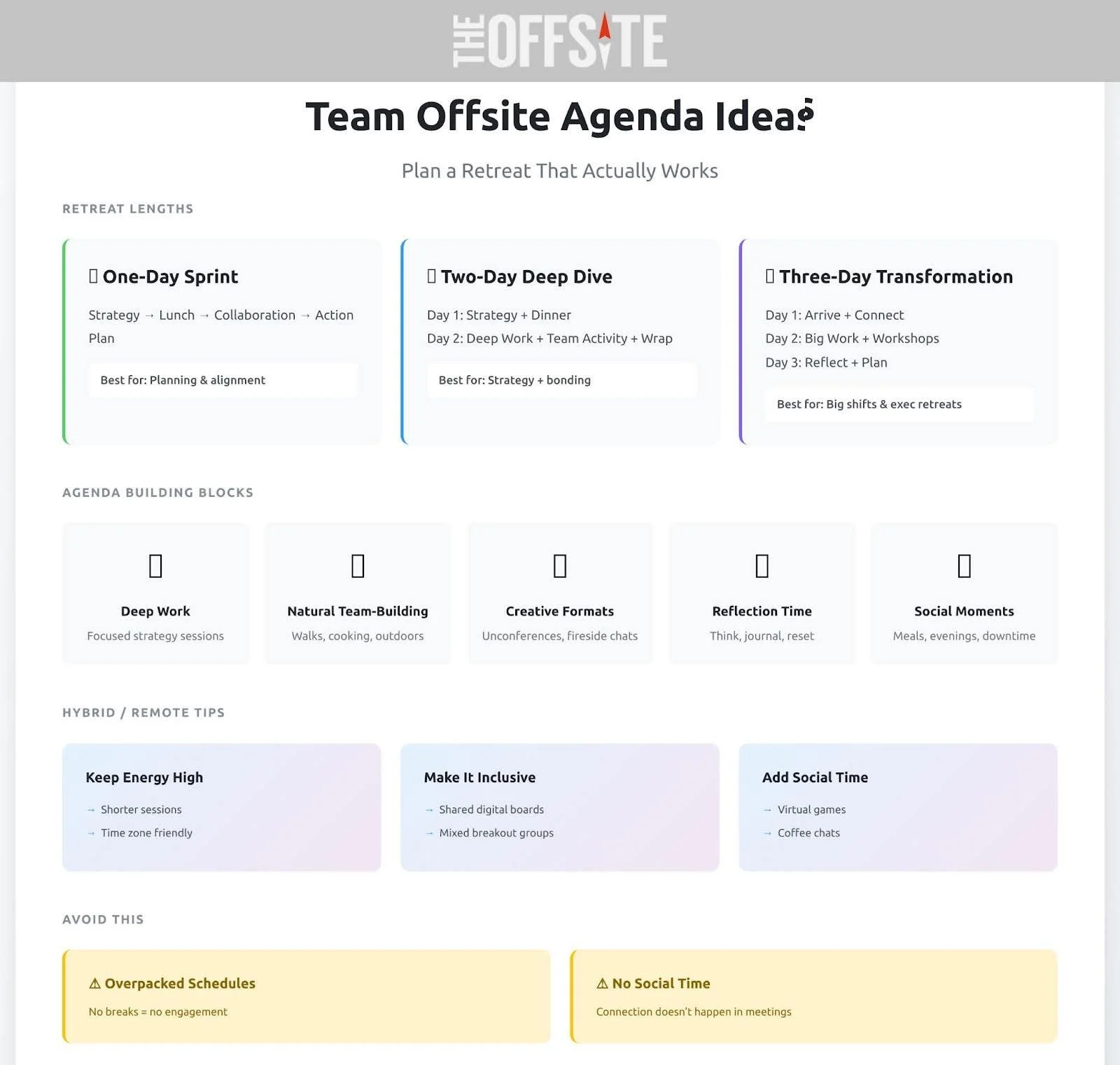
The One-Day Sprint
A single day works when you need focused strategic time without overnight logistics. The key is resisting the urge to cram. Start mid-morning (not 8 a.m.—let people arrive without stress), dedicate your first 90-120 minutes to the most important strategic work, break for lunch that's actually relaxing, then shift to collaborative or creative formats in the afternoon.

Close with clear action planning so the momentum doesn't evaporate the moment people leave. Total productive time: 5-6 hours. That's it. Anything more and you're just tiring people out.
What this handles well: Quarterly planning, problem-solving sessions, alignment conversations that benefit from face-to-face energy but don't require overnight immersion.
The Two-Day Deep Dive
Two days is the sweet spot for most teams. You get real strategic work done without the retreat feeling like a slog. Arrive the afternoon of day one—this gives people time to transition mentally from work mode. Use that first evening for a structured dinner (conversation prompts, team introductions, goal-setting) and low-key social time.
Day two is your workhorse. Morning handles the intensive strategic session while everyone's fresh. Afternoon shifts to team-building, creative workshops, or outdoor activities—something that gets people moving and interacting differently. Close with action planning and reflection while energy is still high, not at 5 p.m. when everyone's mentally checked out.
What this handles well: Strategic planning with meaningful team connection, cross-functional alignment, leadership offsites where both work and relationships need attention.
The Three-Day Transformation
Three days makes sense when you're tackling significant organizational shifts, bringing together distributed teams who rarely meet in person, or combining strategic work with serious skill-building. The structure is simple: day one transitions people out of daily work mode, day two does the heavy lifting, day three integrates everything and sends people home with clarity.
Day one should feel easy—arrival, settling in, and an opening dinner that's more social than structured. Save your brain for day two, which handles morning strategic sessions, afternoon workshops or breakouts, and evening team activities that build connection. Day three focuses on reflection, action planning, and creating space for people to process before they scatter. Some teams add an optional activity before checkout, others keep it open. Both work.
What this handles well: Annual planning, major strategic shifts, executive retreats, team offsites where deep cultural work or trust-building is as important as the business agen
Agenda Elements That Actually Work
The strongest agendas combine structure with flexibility. Here are the building blocks that consistently create engagement without burning people out:
Strategic Work Sessions
These are your deep dives—the meaty topics that benefit from in-person energy. Whether it's quarterly planning, creative brainstorming, or solving a team-wide challenge, this is where the real work happens. Keep them to 90-120 minutes maximum with built-in breaks. Any longer and you lose people.
Team-Building That Doesn't Feel Forced
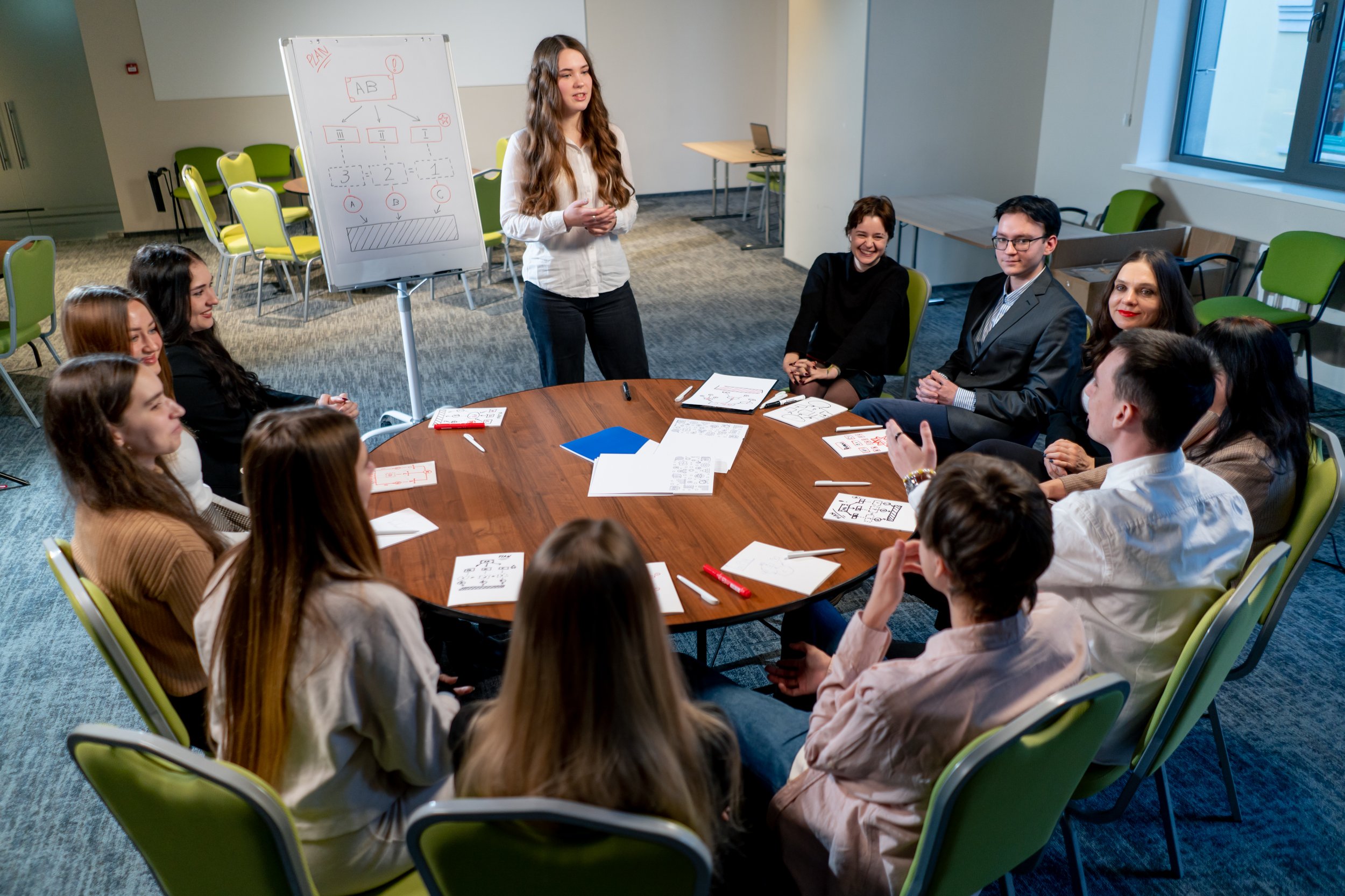
Skip trust falls. Go for activities that create natural connection—walking meetings through scenic areas, collaborative creative projects, cooking challenges, or outdoor adventures. The best team-building doesn't announce itself as team-building. It just happens when people do something interesting together.
Unconventional Formats
Standard presentations drain energy fast. Mix it up:
Walking meetings for brainstorms that benefit from movement
Unconference hours where the team sets the agenda in real time
Build-your-own breakouts where people lead sessions on topics they care about
Fireside chats with founders, clients, or industry voices that add outside perspective
Reflection Time
Build in space for people to process. Silent mornings where people can journal, walk, or just think without pressure. Reflection sessions after big strategic discussions. These moments often produce the insights that packed agendas miss.
Social Connection
The best conversations happen outside formal sessions—over meals, during evening activities, around fire pits. Schedule these deliberately. They're not filler time. They're where trust builds and ideas crystallize.
Virtual or Hybrid? Agenda Considerations for Remote Teams
When it comes to offsite agenda ideas, planning for a hybrid or remote crew takes a little extra finesse. You’ve got time zones, screen fatigue, and that tricky balance of making everyone feel like they’re in it together—even if half the team’s tuning in from home.
Start with Time Zones
Keep the schedule light and purposeful. Prioritize fewer sessions with more intention. That way, no one's forced to dial in at 6 a.m. or power through a full day on Zoom. Short, strategic blocks are easier to stay present for—and your team will thank you.
Involve Remote Participants Like They’re in the Room
No one wants to feel like a fly on the wall. Break teams into mixed in-person/remote breakout groups, use live polls to spark quick engagement, and lean into collaborative tools like Miro or FigJam so everyone can contribute in real time.
Don’t Skip the Social Stuff

Remote employees shouldn’t miss out on bonding time. Add virtual-friendly extras like trivia games, casual coffee chats, or even group meal deliveries so the whole team can share a moment—even from miles apart.
Hybrid offsites can be just as engaging as in-person ones—it just takes a thoughtful agenda that respects everyone’s time, energy, and need to feel included.
What Not to Do When Planning Your Team Offsite
Even the strongest team offsite agenda ideas can fall apart if the structure’s off. It's not just about packing in content—it’s about creating space for connection, clarity, and, yes, a little fun. A few common missteps can shift the vibe from “this is great” to “when’s the next break?”
Let’s talk about what not to do—and how to avoid agenda burnout.
Overpacking the Schedule
Squeezing sessions back-to-back might look efficient on paper, but it drains your team fast. Real engagement requires breathing room—time to process, reset, or continue a conversation that sparked something meaningful.
Leave space for spontaneity. Those unplanned chats, impromptu brainstorms, or extended breaks often become the most valuable parts of the retreat.
Quick Fixes:
Schedule 15-20 minute buffers between sessions
Add a daily "flex block" where people can rest, work independently, or collaborate organically
Build in post-session wind-down time—yes, it's allowed
Skipping Social Time
The biggest breakthroughs often happen outside formal sessions—over dinner, on walks, during game nights. If your agenda doesn't explicitly include time for people to connect as humans (not just colleagues), you're missing half the value of getting together.
The Offsite: Retreats That Don’t Feel Like Work
At The Offsite, we plan retreats that people actually want to attend. No generic hotel conference rooms. No copy-paste agendas. Just custom-built experiences that connect your team, spark fresh thinking, and make you look like the hero who pulled it all off.
We’ve spent thousands of hours planning offsites for companies around the world, so we know what works—and what gets ignored after the closing slide deck. Our team handles everything, from big-picture vision to tiniest logistics, with the kind of white-glove attention usually reserved for VIPs (because your team is the VIP). We’re fully remote, fully flexible, and fully invested in making your retreat unforgettable—for all the right reasons.
Here’s How We Make It Easy:
Totally custom agendas based on your team’s goals, vibe, and preferences
Venue sourcing from our massive, curated database (mountain lodges to beach resorts)
On-site coordination so you’re not running around solving problems—we are
Team-building experiences that don’t involve trust falls (unless you’re into that)
Budget management and transparent flat-fee pricing—no surprises, ever
With a 97% client retention rate, our teams come back year after year because the retreats we design actually deliver—on connection, clarity, and momentum that lasts long after everyone goes home. Reach out today for a free consultation.
Frequently Asked Questions
How do I structure a team offsite agenda for maximum engagement?
Start by front-loading your most important strategic work when energy is highest—typically morning sessions on day one or two. Break up intensive work with movement (walking meetings, outdoor activities) and social connection (structured meals, evening activities). The key is balancing focus time with breathing room. Most agendas fail by overpacking sessions back-to-back, which drains engagement fast.
Build in 15-20 minute buffers between sessions and at least one "flex block" per day where people can rest, work independently, or have organic conversations. The best insights often happen during unstructured time, not in scheduled sessions.
What's the ideal length for a corporate offsite?
Two days works best for most teams—enough time for meaningful work without feeling like a marathon. Day one focuses on strategic sessions and team connection, day two tackles action planning and includes team-building activities. Three-day offsites work well when you need more intensive strategy time or want to incorporate significant travel to a destination.
One-day offsites (6-7 hours) can be effective for teams that meet regularly and need focused planning time without overnight logistics. Anything longer than three days risks diminishing returns unless you're tackling major organizational shifts or executive-level strategic planning.
Should I include team-building activities in every offsite agenda?
Yes, but choose activities that fit your team's energy and goals. Team-building doesn't mean trust falls or forced icebreakers—it means creating opportunities for people to connect outside their usual work roles. Walking meetings, collaborative creative projects, cooking challenges, or outdoor adventures all build relationships while feeling natural rather than contrived.
The timing matters too. Early team-building (day one) helps people settle in and builds rapport that makes later strategic discussions more productive. Avoid scheduling team-building during the same timeframe as your most intensive work sessions—people need both, just not simultaneously.
How do you plan offsite agendas for hybrid or fully remote teams?
Hybrid agendas require extra intentionality around inclusion. Keep sessions shorter (60-90 minutes max) to combat screen fatigue, use collaborative tools like Miro or FigJam so remote participants can contribute in real time, and structure mixed breakout groups that combine in-person and virtual attendees.
Always plan around time zones—identify the overlap that works for everyone and build your core sessions there. Add virtual-friendly social elements like group meal deliveries, online games, or casual coffee chats so remote team members don't miss the connection that happens naturally for in-person attendees. The goal is ensuring remote participants feel like active contributors, not spectators.
What are common mistakes when planning retreat agendas?
The biggest mistake is overpacking. Back-to-back sessions without breaks drain energy and reduce the quality of engagement. Leave space for spontaneous conversations, processing time, and social connection—these "unstructured" moments often produce the most valuable insights.
Other common missteps: skipping social time entirely, neglecting to communicate the "why" behind the retreat, failing to plan for different energy levels throughout the day, and ending without clear action items. The best agendas create flow between focus and restoration, structure and flexibility.
How far in advance should I finalize my offsite agenda?
Start planning your high-level agenda structure 6-8 weeks before the retreat—this helps with venue selection, travel logistics, and team calendar blocking. Finalize specific session details and timings 2-3 weeks out, which gives you flexibility to adjust based on team needs while still leaving time for any special activity bookings or material preparation.
Share the agenda with your team at least one week before the retreat so people know what to expect and can prepare mentally. At The Offsite, we build agendas collaboratively with leadership teams, then handle all the detailed coordination so nothing falls through the cracks.