
Quick Virtual Meeting Games: 15-Minute Team Activities
Fifteen minutes can shift the whole mood of a meeting. The right 15-minute games for virtual meetings break up the monotony, spark real connection, and reset the energy—without dragging things off track. They’re quick, simple, and surprisingly effective when done with a bit of intention.
For teams needing more than quick icebreakers, The Offsite Co. designs full virtual events, facilitated sessions, and ongoing engagement support that actually lands. We handle everything from 15-minute energizers to holiday parties with shipped kits and live hosts.
Below, you'll find ten games we've seen work consistently across remote teams—no special tools, no forced participation, no eating up half your meeting. Simple setups, real engagement, and zero cringe. If you want them facilitated live without the awkward energy, reach out and we'll handle it.
10 Short Games That Wake Up the Zoom Room
Fifteen minutes can recharge a team, reset a meeting, or warm up a room. These quick games work well for remote teams, helping people connect, laugh, and lean in—without needing breakout rooms, apps, or a second calendar invite.
1. One-Word Icebreaker
A quick pulse check that cuts through the usual "how's everyone doing" silence. Each person drops one word in chat or says it aloud—something that captures their current state, weekend plans, or reaction to a prompt you toss out.
How it works: Pick a question ("Describe your Monday in one word" or "What's your energy level right now?"), then go around the room collecting single-word responses. No explanations, no stories—just the word.
Why you should consider it: Gets everyone speaking early without putting anyone on the spot. Introverts can participate through chat, extroverts can elaborate if time allows, and you get a genuine temperature read on the room in under three minutes.
For groups: Any size
2. This or That
Rapid-fire choices that reveal preferences and spark light debates. Coffee or tea? Mountains or beach? Tabs or spaces? The questions move fast, answers come faster, and the room loosens up without anyone having to share personal stories.
How it works: Fire off 8-10 quick "this or that" questions. People respond in chat, with reactions, or by raising hands. Keep the pace snappy—no need to discuss every answer unless something sparks natural conversation.
Why you should consider it: Zero prep is required; it works across time zones and energy levels and reveals surprising alignments that become inside jokes later. The speed prevents overthinking and keeps momentum high.
For groups: 5-25 people
3. Emoji Mood Check
A visual check-in that gives quiet team members an easy entry point. Instead of forcing verbal responses, people drop emojis in chat that capture how they're feeling—stressed, energized, caffeinated, or ready to tackle the day.
How it works: Ask the question ("Drop an emoji that captures your current mood"), wait 30 seconds while people respond in chat, then briefly acknowledge patterns you notice. Optional: ask one or two people to explain their choice if they seem willing.
Why you should consider it: Creates psychological safety for people who don't want to verbally announce they're struggling. The visual nature makes it faster than verbal check-ins and surfaces team energy patterns worth addressing.
For groups: Any size, especially useful for introverts or quiet teams
4. Two Truths and a Lie
A classic that surfaces unexpected stories and helps people see each other beyond job titles. Each person shares three statements about themselves—two true, one fabricated—and the group votes on which one's the lie.
How it works: One person shares their three statements. Give the group 30-60 seconds to discuss or vote in chat. Reveal the answer, let the person share context if they want, then move to the next participant.
Why you should consider it: Humanizes the room quickly. You learn your coworker climbed Kilimanjaro, speaks four languages, or once opened for a band you actually know. These details build connections that carry into regular work conversations.
For groups: Up to 10 (larger groups make this drag)
5. Scavenger Hunt (Mini Version)
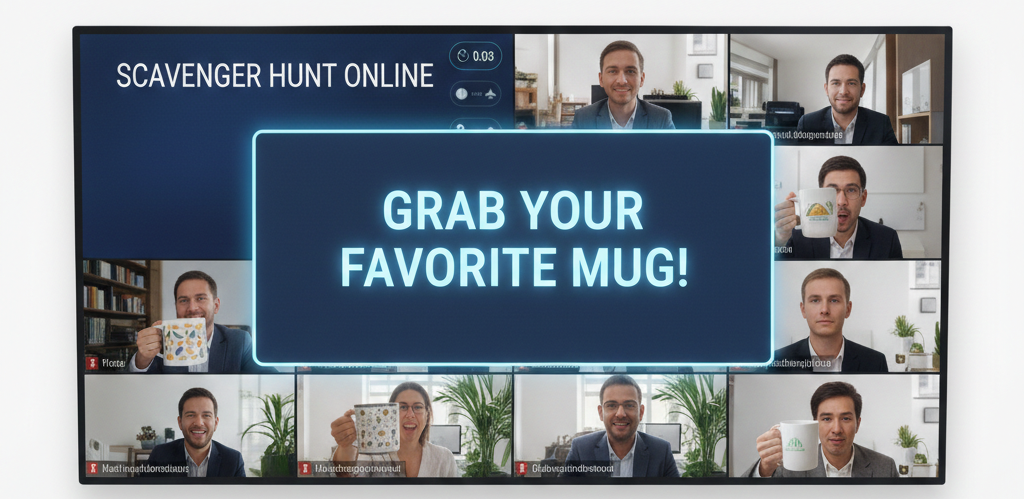
Gets people out of their chairs and moving. You call out an item or category, people race to find it in their home, and the first person back on camera wins. The movement alone shifts energy even if no one's particularly competitive.
How it works: Give a prompt ("Find something blue!" or "Grab your favorite mug"), count down from 10, and see who returns first. Run 3-4 rounds to build momentum, then move back into your meeting agenda.
Why you should consider it: Physical movement combats Zoom fatigue. People stand, walk around, stretch without it feeling like forced "wellness." Plus, seeing inside people's homes—even briefly—creates familiarity that remote work often lacks.
For groups: Any size, works best with cameras on
6. GIF Battle
A low-stakes competition that rewards creativity and speed. You throw out a prompt, people respond with the most relevant or funniest GIF they can find, and the group votes on winners through reactions or a quick poll.
How it works: Drop a prompt in chat ("Your face when the meeting could've been an email" or "Describe your weekend plans"). Give people 30-45 seconds to search and post their GIF. Acknowledge the best ones, laugh together, and move on.
Why you should consider it: Perfect for teams that already communicate through GIFs and memes. Requires zero explanation, works across cultures better than word-based games, and lets personality shine through in a format people already use daily.
For groups: Casual or creative teams of any size
7. Would You Rather: Work Edition
Workplace-themed dilemmas that spark debate and reveal how people think. The questions stay light but touch on real preferences—remote vs office, Slack vs email, unlimited vacation vs four-day weeks.
How it works: Pose a work-related "would you rather" question. People respond in chat or verbally, then discuss briefly if strong opinions emerge. Run 3-5 questions depending on time and engagement level.
Why you should consider it: Creates natural conversation about work preferences without feeling like a forced team-building exercise. You learn how people actually think about collaboration, communication, and work-life balance in a format that feels like casual banter.
For groups: Any size
8. Silent Meeting Challenge
One full minute where nobody speaks—only emoji reactions, chat messages, and raised hands allowed. It's absurd, slightly uncomfortable, and breaks the usual meeting rhythm in a way that wakes people up.
How it works: Announce you're going silent for 60 seconds. Start the timer. Watch as people experiment with reactions, GIFs, and creative chat usage. Break the silence with a laugh and move forward.
Why you should consider it: Disrupts autopilot meeting mode. The forced constraint makes people play with tools they normally ignore, and the shared weirdness creates a memorable moment that loosens everyone up.
For groups: Any size
9. Rapid Fire Q&A
Put someone in the hot seat with 60 seconds of rapid personal questions. Nothing invasive—just quick preferences, fun facts, and details that help the team see them as a full person rather than a job function.
How it works: Pick a volunteer (or rotate through the team systematically). Fire off 8-12 quick questions in 60 seconds: favorite food, worst job, hidden talent, go-to karaoke song. Answers stay short, and the pace stays fast.
Why you should consider it: Creates a spotlight moment without requiring preparation or performance. People enjoy being the focus briefly, and the rapid pace prevents overthinking. You learn real details that become conversation starters later.
For groups: Under 20
10. Guess the Desk
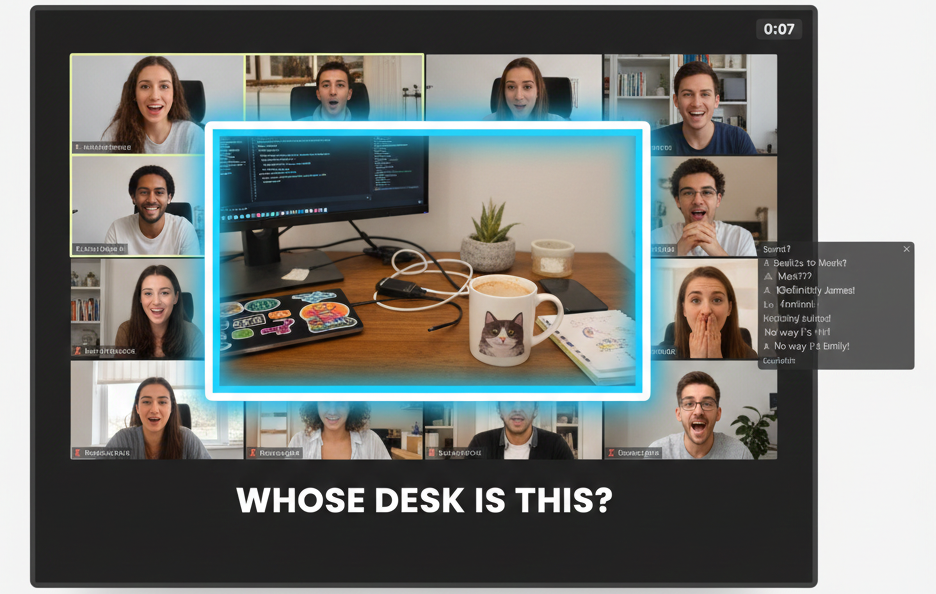
Share cropped or zoomed-in photos of team members' desk setups and let people guess whose workspace they're looking at. The little details—stickers, plants, coffee mugs, background chaos—reveal personality in ways job titles never will.
How it works: Collect photos ahead of time (close-ups work best), share them one at a time, and let people guess in chat. Reveal the answer, let the person share context about their setup if they want, then move to the next photo.
Why you should consider it: Builds familiarity through small, authentic details. You notice your coworker collects vintage cameras, keeps a photo of their dog prominently displayed, or apparently works surrounded by an alarming number of coffee cups. These observations create connection.
For groups: 10-30 people
Getting Through Team Games Without the Cringe
Most virtual games fail because of delivery, not concept. A solid game run by someone who's visibly uncomfortable becomes painful for everyone. Energy matters more than the activity itself—if you're apologetic or rushing through it, your team will disengage before the first question drops.
Read the Room, Then Adjust
Not every game works for every team dynamic. A GIF battle lands with marketing teams but might fall flat with finance groups who communicate differently. Rapid-fire Q&A works when people know each other but feels invasive with brand-new teams.
Watch participation patterns. If half the room goes silent during a game, that's feedback—either the format doesn't match the group or your delivery needs adjustment. The best facilitators pivot mid-game when energy dips, cutting a planned 10-minute activity to 5 if engagement isn't there.
What Makes Games Work
Execution beats novelty. A simple "this or that" run with genuine enthusiasm outperforms an elaborate custom game delivered halfheartedly. These elements separate games people tolerate from ones they actually enjoy:
Clear instructions delivered once: Explain the rules in 30 seconds or less, then start. Over-explaining kills momentum before the game begins.
Genuine opt-outs for introverts: "Feel free to participate in chat if you prefer" removes pressure without singling anyone out.
Tight timing: Set a timer and stick to it. Games that run long become the thing people dread, not enjoy.
Your energy sets the tone: If you sound excited, people match that. If you sound apologetic ("I know this is silly, but..."), they'll treat it as silly filler.
Rotate formats regularly: The same game every week becomes background noise. Mix quick check-ins, creative challenges, and light competition to keep things fresh.
When to Skip the Game Entirely
Sometimes the best move is not running a game at all. If your team just survived a brutal week, a product launch went sideways, or you're delivering difficult news, forced fun reads as tone-deaf. Trust your judgment on when the room needs genuine space rather than manufactured energy.
Games work best as resets between focused work, not as mandatory morale Band-Aids when deeper issues need addressing.
How We Build Connection That Carries Back to Work
Team building works when it feels real, not rushed. We help teams connect through shared momentum—whether they’re gathering for an hour or stepping into a three-day offsite. Every format gets the same care, strategy, and clarity.
Why Companies Work with The Offsite
We design team-building experiences for remote, hybrid, and in-person teams—each one shaped around purpose and people. A one-hour session or a full retreat can both carry weight, when they’re built with intent. We handle the strategy, planning, and execution so your team can focus on the experience. That means less juggling and more impact. Whether it’s a quick morale boost or a high-stakes leadership gathering, we create moments that stick and scale with you.
What We Offer
We plan with clarity from the first step, building each experience around your team’s goals, format, and schedule. Whether you’re online or on-site, everything is designed to feel thoughtful, seamless, and easy to step into.
Virtual team-building and holiday parties with full logistics
Retreat venue selection from our curated, commission-free database
Custom agendas and engagement-focused activities
Travel, lodging, and vendor coordination
Dedicated Retreat Producer from start to finish
Flat-fee pricing with no last-minute surprises
Every detail is handled so the experience feels natural, focused, and worth the time.
Let’s Make Your Next Meeting Count
A few well-timed 15-minute games for virtual meetings shift energy, spark real connection, and set the tone for everything that follows. When delivered with intention and the right pacing, these quick moments stop feeling like filler and start becoming something your team actually looks forward to.
We maintain a 97% year-after-year client retention rate designing virtual experiences—from 15-minute energizers to full holiday events—that actually deliver. Connection that feels honest, useful, and easy to walk into. Ready to make your virtual meetings work harder? Reach out and let's build it.
Frequently Asked Questions
What are the best 15-minute games for large virtual teams?
Games like "This or That," emoji mood checks, and GIF battles scale well for groups over 25. They use chat and reactions instead of requiring everyone to speak, which keeps things moving and prevents the meeting from dragging. Avoid games like Two Truths and a Lie or Rapid Fire Q&A for large groups—they work better with under 15 people, where individual participation doesn't bottleneck the timeline.
Do I need special software to run 15-minute virtual meeting games?
No. Most games work with standard Zoom, Teams, or Google Meet features—chat, reactions, screen sharing, and a timer. Scavenger hunts and GIF battles need nothing beyond what's already built into your platform. The games that require external tools (polls, wheels, breakout automation) usually aren't worth the 15-minute constraint anyway.
How often should we run games in virtual meetings?
Weekly standing meetings benefit from rotating a quick game at the start—it signals a shift from solo work mode to collaborative space. Monthly all-hands or quarterly planning sessions work well with slightly longer formats. Daily standups rarely need games unless team energy is visibly low. Read your team's engagement—if people start groaning or participation drops, you're overdoing it.
Can introverts participate in virtual meeting games without feeling pressured?
Yes, if you design opt-outs into the format. Emoji mood checks, GIF battles, and "This or That" let people participate through chat instead of speaking. Always offer, "Feel free to drop your answer in chat if you prefer" as an option. Avoid putting anyone on the spot unexpectedly—games like Rapid Fire Q&A should use volunteers, not surprise selections.
What's the biggest mistake when running virtual team games?
Over-explaining. Spending three minutes describing a game that takes two minutes to play kills all momentum. State the rules once in 30 seconds, then start. If someone's confused, they'll ask. The second biggest mistake is apologizing before you begin—"I know this is silly, but..." signals that even you don't believe in the activity, so why should they?
Does The Offsite Co. facilitate virtual games for teams?
Yes. We run one-off sessions and ongoing series for remote and hybrid teams. You show up as a participant; we handle facilitation, tech coordination, and pacing so the games actually land. Whether it's a 15-minute meeting energizer or a full virtual event, we design around your team's culture and goals.