
Best Corporate Retreats for Team Building and Strategic Planning
The best corporate retreats create real shifts—not just in perspective, but in how teams work together after they return. Whether you're rallying a distributed team in person for the first time, recalibrating after rapid growth, or aligning leadership through organizational change, the right retreat gives people room to think clearly and reconnect with what matters. But pulling that off requires more than booking a venue and hoping for the best.
That's where The Offsite Co. comes in. We build retreats around your team's real challenges—not cookie-cutter templates. We source venues, coordinate logistics, and manage execution so you can stay focused on facilitating the conversations that count. Ready to create something meaningful? Book a free consultation and let's make it happen.
The Right Environment for Your Team's Work
Location impacts outcomes more than most companies realize. If you need your team thinking creatively, putting them in a generic hotel conference room doesn't support that goal. If you're tackling sensitive conversations around leadership or company direction, you need a setting that feels private and psychologically safe.
Match the environment to the work:
Creative thinking → Natural settings with flexible indoor-outdoor spaces, properties with strong design that inspires new perspectives.
Sensitive conversations → Private venues away from other corporate groups, settings where people feel psychologically safe to speak honestly.
Strategic planning → Quiet environments with minimal distractions, mountain or coastal settings that naturally lower stress and improve focus.
Team bonding → Properties with communal spaces, shared meals, outdoor activities that create natural connection points.
The physical environment shapes how people show up. Natural settings—mountains, coastlines, forests—tend to lower stress and improve focus. Properties with a clear sense of place help teams feel like they've genuinely stepped away from routine.
Facilitation That Knows When to Guide and When to Step Back
External facilitators bring value when they're skilled at drawing out honest conversation, managing group dynamics, and keeping teams focused on outcomes. They're less valuable when they're running generic exercises that feel disconnected from your team's real challenges.
Strong facilitators:
Customize their approach to your specific team dynamics, not just run their standard playbook.
Read the room and adjust in real time when energy shifts or tensions surface.
Know when to facilitate and when to simply create space for teams to work through things themselves.
Some retreat moments need structure and guidance. Others need to be left alone. Teams often need time to process together without someone directing every conversation.
Follow-Through After Everyone Goes Home
Retreats fail when they exist in isolation. The momentum and alignment created during an offsite evaporate if there's no plan for carrying insights back into daily work.
What follow-through looks like:
Documented takeaways shared with the entire team within 48 hours.
Clear next steps with specific owners and realistic deadlines.
Follow-up meeting within 2-3 weeks to review commitments and address blockers.
Leaders visibly acting on decisions made during the retreat.
This doesn't mean elaborate post-retreat programs. It means simple things that show the retreat mattered. Teams notice when retreat conversations lead nowhere. They also notice when leadership follows through.
6 U.S. Destinations That Host the Best Corporate Retreats
The best corporate retreats begin with the right place. These six destinations deliver clarity, calm, and the kind of setting that invites better thinking and stronger connection.
1. Devil’s Thumb Ranch – Colorado

Location: Tabernash, CO (near Denver)
Spread across 6,000 acres in the Rocky Mountain wilderness, Devil’s Thumb Ranch offers luxury that feels grounded. Teams stay in upscale cabins, hold strategy sessions in rustic-modern spaces, and explore trails that clear the mind. It’s an environment built for depth, reflection, and real work away from distraction.
Best for: Leadership or strategic retreats that require space—both physical and mental.
Capacity: 50–150 guests
2. Hidden Pond – Maine
Location: Kennebunkport, ME
Hidden Pond blends natural beauty with quiet elegance. Cottages are tucked into birch groves, meals are chef-driven and local, and the whole experience invites calm. There’s something about the balance of design and nature here that pulls creative thinking to the surface. Ideas tend to land more clearly when the setting slows everything down.
Best for: Creative teams or execs looking to recharge and ideate in a peaceful, design-forward setting.
Capacity: 20–80 guests
3. Calamigos Guest Ranch – California
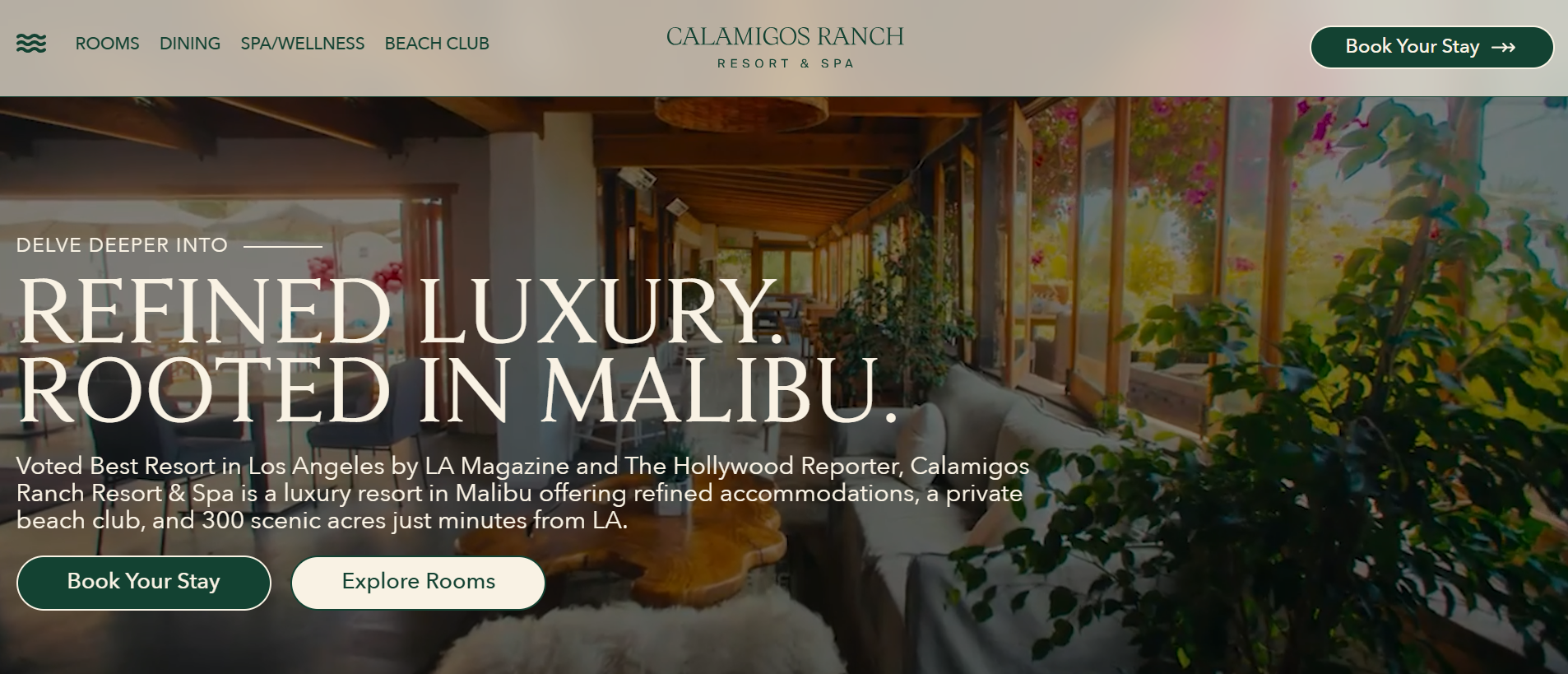
Location: Malibu, CA
Set in the canyons above the coast, Calamigos offers privacy with a touch of polish. Ocean breezes, wellness programming, and tailored service make it a retreat that feels effortless without being passive. It works especially well for teams who need rest and reflection after pushing hard toward a major milestone.
Best for: West Coast teams, founder/exec summits, or teams emerging from a heavy launch cycle.
Capacity: 40–200 guests
4. Blackberry Mountain – Tennessee
Location: Great Smoky Mountains, TN
This retreat was built with intention in every direction. Blackberry Mountain blends luxury with natural quiet, offering panoramic views, focused meeting spaces, and deep comfort. Strategy flows better when people feel grounded, and this setting creates the calm needed for honest conversations and lasting alignment.
Best for: Deep planning, company recalibration, or team trust-building.
Capacity: 30–100 guests
5. Miraval Austin – Texas
Location: Texas Hill Country
Miraval offers a fully immersive wellness experience set against the backdrop of rolling hills and open sky. The rhythm of the day invites presence, with opportunities for meditation, movement, nature walks, and thoughtful meals that slow things down. This is where teams remember how to breathe, think clearly, and connect without screens or stressors.
Best for: Remote teams, fast-scaling companies, or groups navigating high-stress growth periods.
Capacity: 50–150 guests
6. Camp Wandawega – Wisconsin
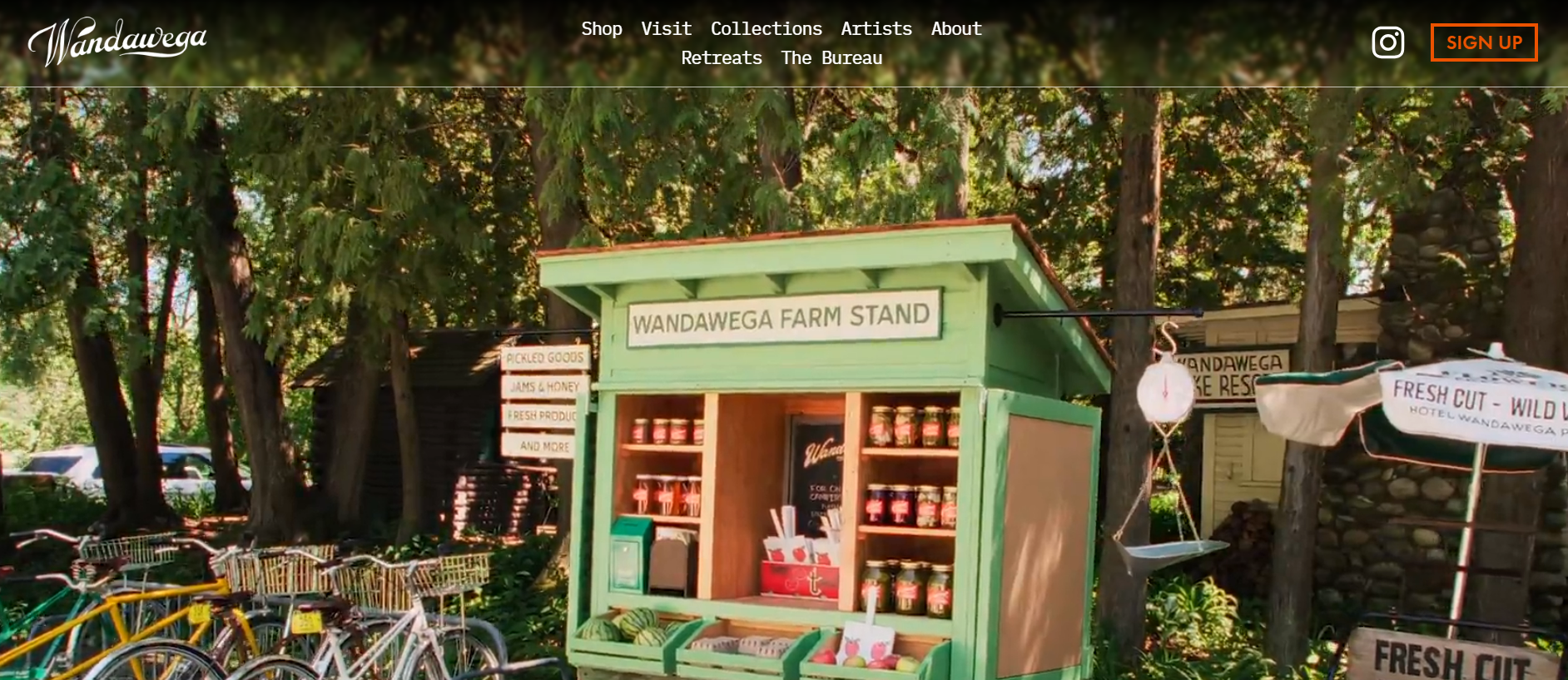
Location: Elkhorn, WI
Camp Wandawega brings vintage charm to a corporate off-grid reset. Think old-school cabins, open-air meetings, canoe time, and bonfires that go late. It’s unpolished in the best way and helps teams drop the pretense and reconnect as people first, coworkers second. The kind of place where trust builds naturally.
Best for: Startup teams, creative departments, and anyone craving team connection with no slides required.
Capacity: 20–60 guests
How to Pick the Right Retreat for Your Team
Choosing the right retreat starts with knowing what your team actually needs. The location, timing, and planning approach can make or break the entire experience.
Start With the Right Question
Every team is carrying something different—stress, growth, disconnection, momentum. Before locking in a venue or a plan, ask the one thing that matters most: what does your team need right now? The answer might point to rest, clarity, creativity, or connection. Get that right, and the rest falls into place.
Plan for the Right Time
Off-peak travel months bring more than lower rates. They offer better availability, less crowded venues, and a calmer rhythm. That kind of timing makes for smoother logistics and more space to settle in. Teams notice when the pace works with them, not against them.
Budget and Bandwidth
A thoughtful retreat works best when it’s built with intention, not distraction. Spend where it counts: environment, food, facilitation. Skip the branded water bottles if it means upgrading the space where real work gets done.
Focus the budget on high-impact experiences.
Choose comfort over clever giveaways.
Plan with time and team energy in mind.
DIY sounds appealing until the logistics pile up. Unless someone on your team can dedicate real bandwidth, bringing in support will save more than just time. It will protect the quality of the experience.
Who Plans the Best Corporate Retreats? We Do
At The Offsite, every retreat we design starts with your team. We look at culture, pace, goals, and energy. Whether you're bringing ten leaders to reset or two hundred teammates to reconnect, the retreat takes shape around what matters most to you.
Our Venue Network Does the Heavy Lifting
Over the years, we've built one of the most curated, deeply vetted venue libraries in the country. Forest hideaways in the Rockies. Coastal sanctuaries in Maine. High-desert architecture in the Southwest. Historic ranches in wine country.
These are places designed to hold space for presence, clarity, and connection—not generic conference hotels. You won't find them on booking platforms, and you won't have to second-guess the fit.between. These are places designed to hold space for presence, clarity, and connection. You won’t find them on hotel platforms, and you won’t have to second-guess a thing.
We Handle It All
You stay focused on your people. We stay focused on the rest.
Venue sourcing matched to your team's goals and budget
Travel coordination including flights, ground transportation, and accommodations
Program design with wellness facilitators, executive coaches, chefs, and activity leaders
Real-time budget tracking with transparent flat-fee pricing
On-site coordination from arrival to departure
You stay focused on your people. We stay focused on the rest. No chaos, no vendor juggling, no surprise invoices two weeks later. Just clear plans and clean execution.
A Retreat That Actually Fits
Some teams need movement and outdoor programming. Others need stillness and space to think. Some want guided workshops and structured sessions. Others just need uninterrupted time for honest conversations. We start with your real challenges, then design a retreat that supports them—a plan that clicks into place because it was made for you, not pulled from a playbook.
Let’s Build the Retreat Your Team Deserves
We help you match your goals with the right location, the right format, and the right rhythm. Every detail works in service of what your people need most.
You bring the vision. We’ll bring the roadmap, the team, and the execution to match. Let’s build something your team will feel long after they return—clearer, closer, and more aligned than they arrived. Reach out, and let’s get started.
Frequently Asked Questions
How far in advance should we start planning a corporate retreat?
Start planning 3-6 months out for groups under 50 people, 6-12 months for teams of 100+. Peak seasons (spring and fall) require even longer lead times since venues book quickly. The larger your group and the more specific your venue requirements, the earlier you need to start. Early planning also gives your team time to clear calendars, arrange childcare or pet care, and book personal travel if needed.
What's the ideal length for a corporate retreat?
Most effective retreats run 2-4 days:
2 days—Works for local teams or focused objectives like quarterly planning.
3 days—Sweet spot for most teams, balances structured sessions with relationship building.
4-5 days—Best for distributed teams meeting in person for the first time or tackling major strategic planning.
Anything shorter feels rushed. Longer than 5 days starts interfering with personal commitments and can drag. Factor in travel time—if your team is flying cross-country, build in arrival/departure buffer days so you're not losing session time to logistics.
How do we balance work sessions with downtime during a retreat?
The most successful retreats follow a 50/30/20 framework: 50% unstructured time for rest and informal connection, 30% coordinated activities (team building, workshops, shared experiences), and 20% structured work sessions. This might feel light on work time, but the informal moments—morning coffee before email, evening conversations, shared meals—often produce the biggest breakthroughs. Schedule intensive sessions in the morning when energy is highest; leave afternoons flexible for activities or processing time.
What should we look for in a retreat venue beyond meeting space?
Essential considerations most teams overlook:
Reliable Wi-Fi—Run a bandwidth speed test during your site visit, especially for rural venues.
Flexible spaces—Indoor and outdoor options give you backup plans when weather doesn't cooperate.
Natural light—Windowless conference rooms kill energy during multi-hour sessions.
Communal gathering areas—Lounges, fire pits, shared patios create spaces for informal connection.
On-site dining—Eliminates coordination headaches and keeps the group together.
The best venues feel like genuine departures from office environments while still supporting the work you need to do. Generic hotel conference rooms rarely deliver that balance.
How do we measure whether our retreat was successful?
Track both immediate and longer-term indicators:
Immediate—Post-retreat surveys within 48 hours asking what resonated, what fell flat, and whether people feel clearer on next steps.
30 days out—Follow-up on action items from the retreat. Are commitments being kept? Are conversations continuing?
90 days out—Look for changes in collaboration patterns, cross-functional communication, and team morale.
The real measure isn't how people felt during the retreat—it's whether anything shifted after they returned. If retreat decisions led to actual change and people reference shared experiences months later, you succeeded.