
Corporate Wellness Retreats: Supporting Employee Health and Focus
High-performing teams need more than productivity hacks and standing desks. They need space to breathe, time to think clearly, and environments that support sustainable energy—not just output. Corporate wellness retreats give companies a way to invest in employee well-being that goes deeper than traditional benefits packages.
The smartest leaders recognize when their teams are running on fumes. Instead of pushing harder, they're creating space for people to reset. The Offsite Co. designs wellness retreats that do just that—not generic spa days or forced bonding activities. From venue selection to on-site coordination, we build experiences that restore clarity and connection. If you’re ready to give your team the reset they need, get started here.
When Teams Need Wellness Retreats vs. Standard Offsites
Not every team gathering needs to be a wellness retreat. Sometimes teams need strategic planning, sometimes they need team building, and sometimes they need genuine restoration. Knowing the difference helps you invest in what your team actually needs.
What Wellness Retreats Actually Address
Wellness retreats work when teams show specific signs of chronic stress, not just normal fatigue from busy seasons. Standard team building or strategic offsites won't address burnout—they often make it worse by adding more demands on already depleted people.
Signs your team needs wellness programming:
Sustained exhaustion that doesn't improve after weekends or time off.
High turnover among your best performers who are "just tired."
Teams operating in constant reactive mode with no capacity for strategic thinking.
Physical symptoms showing up across multiple team members—headaches, sleep issues, digestive problems.
Mental health vs. wellness—know the difference:
If your team is dealing with trauma, severe anxiety, conflict that's created unsafe dynamics, or substance abuse, those require professional therapeutic intervention first. Wellness retreats support stressed people who need restoration—they're not substitutes for clinical treatment.
How Wellness Programming Differs from Team Building
The structure of wellness retreats operates on different principles. Most successful wellness retreats follow something close to a 50/30/20 framework: 50% unstructured time for genuine rest, 30% optional wellness activities, and 20% light facilitated sessions that don't demand intense engagement.
Compare that to typical team retreats: packed schedules with back-to-back sessions, mandatory bonding activities, evenings filled with social events, and minimal downtime treated as "wasted time." The pacing is completely different because the goals are different.
Facilitator credentials that matter for wellness:
Mindfulness instructors—trained in meditation, breathwork, and stress reduction techniques that help people regulate their nervous systems.
Wellness coaches—focus on sustainable habit formation and energy management rather than performance optimization.
Nutritionists or culinary experts—design meals that support physical restoration, not just feed people efficiently.
Therapists or counsellors—when appropriate, facilitate processing and emotional work in group settings.
Generic team building facilitators aren't equipped for wellness work. Wellness facilitation requires understanding how stress affects the body and mind, not just how to run trust fall exercises.
What outcomes look like: Team building retreats aim for temporary motivation boosts and alignment around goals. Wellness retreats aim for sustainable energy that lasts beyond the retreat, clarity from genuine rest, and nervous system regulation that helps people handle stress better. The timeline differs too—wellness benefits compound over weeks, not days.
Three Types of Wellness Retreats
Not all wellness retreats follow the same model. What your team needs depends on where they are and what's causing the strain.
Restorative retreats:
For teams recovering from burnout or sustained high-pressure periods. These emphasize minimal structure, significant unscheduled time, sleep optimization, nature immersion without demanding activities, and optional gentle movement. Best for teams who've been running on empty and need permission to stop.
Active wellness retreats:
For teams needing physical reset alongside mental clarity. Programming includes daily movement that feels energizing, outdoor activities like hiking or water sports, and nutrition education paired with meals designed for sustained energy. Works well for teams who've been sedentary and need to reconnect with their bodies.
Therapeutic wellness retreats:
For teams navigating transition, conflict, or organizational change. These combine wellness practices with facilitated emotional work: guided reflection with trained facilitators, conflict resolution conversations, and practices like journaling or art therapy. Best for teams where wellness alone won't address underlying issues.
Most retreats blend elements from multiple types, but understanding the primary focus helps you communicate to your team what they're signing up for and why.
The Quiet Getaways Revitalizing America’s Remote Teams
Corporate wellness retreats work best when they’re rooted in place. The land, the pace, and the details shape the experience as much as the programming. Here are six U.S. destinations where clarity doesn’t need a Wi-Fi connection:
1. Skyterra Wellness Retreat—North Carolina
Nestled in the folds of the Blue Ridge Mountains, Skyterra is ideal for leadership teams or health-focused companies that lean into intention. With fully immersive programs, forest hikes, and guided fitness sessions, it's a screen-free reset that restores pace and presence. The surrounding nature doesn't just frame the experience—it leads it.

The property operates on structured programming that includes nutritionist-led consultations, strength and cardio training, and mindfulness practices woven throughout the day. Meals are designed around whole foods and anti-inflammatory principles, supporting physical reset alongside mental clarity. Groups can customize programming intensity based on fitness levels, making it accessible for teams with varied wellness backgrounds.
Our insights: Skyterra works best for teams ready to commit to the full experience—this isn't a place for half-measures or people checking email between sessions. The immersive structure creates accountability that helps high-performers actually slow down. Ideal for companies in high-stress industries (finance, healthcare, tech) where burnout is systemic, not individual.
Capacity: 30–60 guests
2. The Ranch—Malibu, California
The Ranch doesn't take half-measures. This is where high-pressure roles come to decompress under wide skies and with zero digital noise. Designed for executive teams and founders, the experience is fully structured, deeply personal, and intentionally quiet. No cell phones. No fluff. Just movement, nature, and clean fuel for body and mind.
Daily programming includes rigorous hiking (4-8 hours depending on the program), yoga, strength training, and restorative practices. The digital detox is non-negotiable—devices are collected upon arrival. Meals are plant-based and portion-controlled, designed to support detoxification and sustained energy. This is wellness as discipline, not indulgence.
Our insights: The Ranch is intense by design. It's not for every team—some will resist the structure, others will thrive in it. Best for small executive groups (under 20) who need a hard reset and can handle the physical demands. The no-phones policy either makes or breaks the experience; prep your team beforehand or you'll have rebellion.
Capacity: 10–25 guests
3. Miraval Austin—Texas Hill Country
With a view of Balcones Canyonlands and a focus on mindful integration, Miraval Austin brings together spa therapy, equine experiences, and time outside. Remote or hybrid teams looking to bond beyond Slack and spreadsheets will find the right balance of relaxation and connection here. Even the meals are designed for presence.
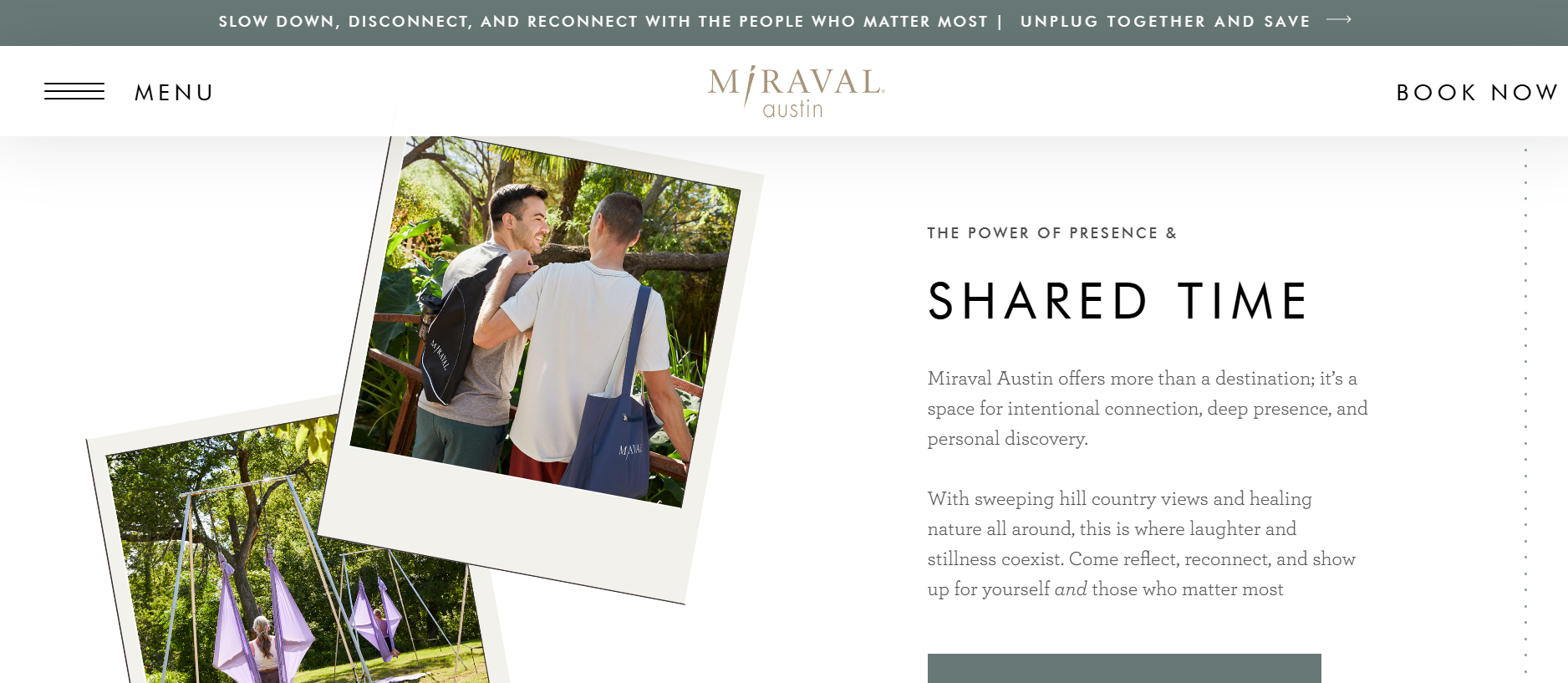
Programming is highly customizable with options ranging from aerial yoga and rock climbing to equine therapy and meditation. The property emphasizes choice—teams can opt into group activities or individual wellness sessions based on their needs. The spa facilities are extensive, and culinary experiences include cooking classes focused on mindful eating and nutrition.
Our insights: Miraval strikes the balance between structure and flexibility better than most wellness properties. It works for teams new to wellness retreats who might be skeptical of "woo-woo" programming—the equine therapy and adventure activities provide entry points for people uncomfortable with pure stillness. Strong choice for hybrid teams needing connection time without forced intimacy.
Capacity: 40–100 guests
4. The Lodge at Woodloch—Pennsylvania
This East Coast gem blends comfort with credibility. Forest bathing, journaling workshops, hydrotherapy—it's all on the menu. Perfect for fast-growing teams based in major metros who need more than a nice hotel and some breakout sessions. The Lodge delivers calm without pretension and structure without pressure.
The property offers over 40 wellness classes daily, from guided nature walks and art therapy to nutrition workshops and biometric screenings. The hydrotherapy facilities include mineral pools, saunas, and contrast therapy that support physical recovery. Programming can be tailored to focus on stress management, creativity, or team connection depending on retreat goals.
Our insights: The Lodge excels at making wellness feel accessible rather than elite. It's particularly effective for teams where wellness hasn't been part of company culture—the variety of programming lets people find their entry point without judgment. Location makes it practical for East Coast companies (under 3 hours from NYC, Philly, Boston), reducing travel friction.
Capacity: 50–120 guests
5. Sunrise Springs—Santa Fe, New Mexico
There's something about the high desert air that makes thinking feel easier. At Sunrise Springs, teams tap into creative restoration through healing arts, reflective programming, and just the right amount of stillness. Ideal for design or content teams chasing inspiration that doesn't come from a screen, this retreat offers a blend of quiet, craft, and clarity in a landscape that seems built for breakthroughs.
The property integrates Native American wellness traditions with contemporary practices—sweat lodge ceremonies, sound healing, creative workshops, and meditation in natural settings. Meals emphasize local, seasonal ingredients that support sustained energy. The pace is deliberately slower than traditional retreats, with significant unstructured time for reflection and creative work.
Our insights: Sunrise Springs is best for teams doing creative or strategic work that requires fresh perspective. The high desert environment and cultural programming create natural distance from routine thinking patterns. Not ideal for teams needing high-energy activities or structured fitness—this is about restoration and ideation, not intensity.
Capacity: 25–70 guests
6. Sedona Mago Retreat—Arizona
Surrounded by red rock energy and a sense of deep stillness, Sedona Mago is tailored for teams navigating change. Whether facing a merger, a new direction, or a moment of burnout, this space meets the moment with holistic wellness and serious calm. Programs can be customized, but the ethos stays the same: go inward to move forward.
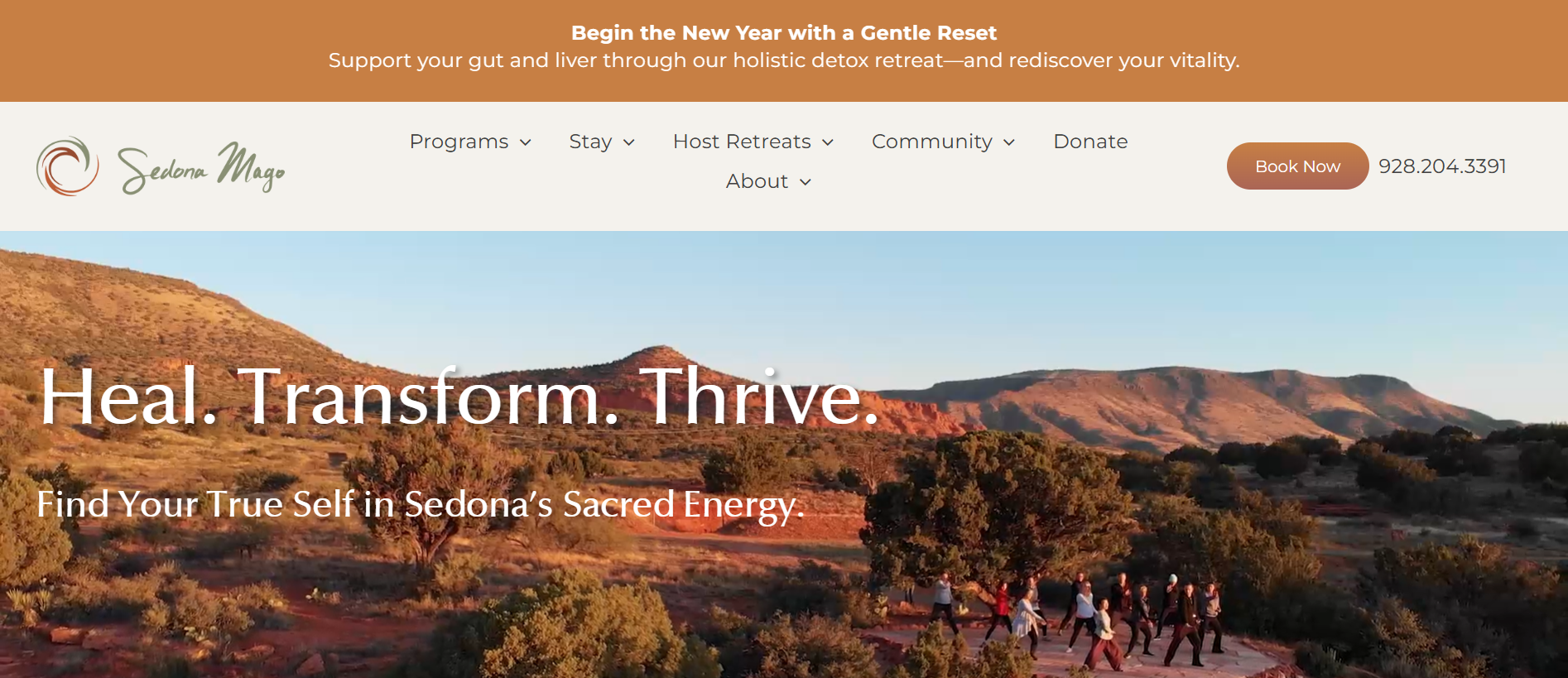
Programming combines movement practices (tai chi, qigong, hiking), energy work, meditation, and facilitated reflection sessions. The retreat emphasizes mind-body integration and stress release through breathwork and bodywork practices. Facilitators work with groups to design programming that addresses specific team challenges—transition, conflict, realignment, or burnout recovery.
Our insights: Sedona Mago is ideal for teams in genuine crisis or transition—mergers, leadership changes, post-layoff recovery. The holistic approach works when standard team building feels insufficient. Not recommended for teams skeptical of energy work or Eastern practices; the programming leans into those modalities and won't resonate with everyone.
Capacity: 20–50 guests
The Easiest Way to Pull Off a Company Wellness Retreat? Hire The Offsite
At The Offsite, we’ve built wellness retreats in forests, deserts, mountaintops, and oceanside hideaways—and we’ve learned the details make the difference. When we’re on it, you don’t have to be.
How We Build Wellness Retreats That Actually Fit Your Team
Every wellness retreat we build starts with your team. Culture, dynamics, goals, budget—we consider it all. Whether it’s a 30-person leadership reset or a full-team gathering across time zones, we match the vision to the format. Nothing pulled from a shelf or done halfway. With us, you get a custom, grounded, start-to-finish experience designed to meet people where they are.
Every Detail, Handled
This is what we live for. While you focus on your people, we’ll handle the details without missing a beat.
Flights, shuttles, and room blocks
Expert wellness facilitators, chefs, and experience leaders
Budget tracking with total transparency
On-site coordination so you can actually participate
No spreadsheets. No last-minute chaos. No babysitting vendors. Just clear communication and tight execution.
Designed From Scratch
Every team comes with its own energy, pace, and pressure points. We design wellness retreats around that reality—not a program template. You might need movement and guided sessions. You might need quiet and space. We’ll build the experience to meet that need. Custom doesn’t mean complicated. It just means it fits.
Let’s Build the Wellness Retreat Your Team Actually Needs
Corporate wellness retreats work best when they’re intentional, personalized, and logistically seamless. That’s where we come in. From building around your team’s energy to handpicking the perfect venue, we turn good ideas into well-executed, fully tailored retreats.
Whether you’re planning a quiet reset for thirty or a full-scale experience for 150, we’re ready. Let’s design something your team won’t forget. Get in touch, and let’s start mapping out a retreat that brings real rest, clarity, and connection—without the planning headache.
Frequently Asked Questions
How do wellness retreats differ from regular team offsites?
Wellness retreats require different facilitators—mindfulness instructors, therapists, nutritionists instead of team building leaders. Sessions are optional rather than mandatory, and success is measured by reduced stress symptoms over months, not decisions made during the retreat. The expectation shift matters: teams attend knowing the goal is restoration, not output or alignment.
What ROI can companies expect from wellness retreats?
Companies with wellness programs see healthcare costs drop by 28% and absenteeism decrease by 25%. Participants report 10% productivity increases. Wellness retreat ROI shows up over months—look for improved retention, reduced sick days, and sustained energy in the 30-90 day window after.
The Offsite Co. tracks post-retreat metrics with clients to measure what's working and what needs adjustment. We help you set baseline measurements before the retreat and follow up at 30 and 90 days to assess the real impact on your team's wellness and performance.
How long should a corporate wellness retreat last?
Most effective wellness retreats run 3-4 days. Two days feels rushed and doesn't allow genuine rest. Five or more days interferes with work and personal commitments. If your team is flying cross-country, build in arrival and departure buffer days so you're not losing session time to travel.
What should we look for in wellness facilitators?
Look for mindfulness instructors certified in stress reduction (MBSR, trauma-informed yoga), wellness coaches focused on sustainable habits rather than performance metrics, nutritionists who design anti-inflammatory meal plans, and licensed therapists when retreats include emotional processing. Generic team building facilitators lack training in how chronic stress affects the body.
How do we get skeptical team members on board?
Be direct about why you're doing this and what it involves. Share observable signs (without calling out individuals) that prompted the decision. Clarify what's mandatory vs. optional so people can opt out of activities that don't work for them. Don't oversell it as "transformative" or make participation feel like a loyalty test.
At The Offsite Co., we help you communicate wellness retreats to your team in ways that address skepticism head-on. We provide pre-retreat communication templates and frameworks that explain the why without corporate fluff—making it easier for people to understand what they're signing up for.
Do wellness retreats work for teams new to wellness?
Yes, but expect skepticism. Teams new to wellness benefit most from active wellness retreats (movement-focused, outdoor programming) rather than pure restoration. Start with shorter retreats (2-3 days) to build trust, make sessions genuinely optional, and focus on accessible practices like walking and breathwork rather than advanced meditation.