
12 Creative Team Offsite Ideas That Build Stronger Remote Teams
Team offsite ideas aren't just fun extras—they're how you build the trust, alignment, and energy that's nearly impossible to create through screens alone. The right offsite gives your team shared experiences that stick. Whether you're deepening relationships, aligning on strategy, or breaking out of routine with something memorable, the setting and activities you choose make all the difference.
Remote teams need more than video calls to build real connection—they need time together that matters. At The Offsite Co., we've planned hundreds of offsites for distributed teams across industries, from 10-person startups to 200+ person companies. We handle logistics, activities, and venue sourcing so you can focus on bringing your people together.
Ready to plan an offsite your team will actually remember? Schedule your free consultation and let's build something that works.

Why Remote Teams Need Offsites Now More Than Ever
Remote work makes so much possible—flexibility, autonomy, deep focus—but without intentional touchpoints, teams can drift. Offsites change that. They give everyone a shared, real-life experience to build on, something that lingers long after everyone’s back behind their screen.
Offsites give remote teams a chance to reconnect as people, reset shared priorities, and build the kind of trust that sticks.
What an Offsite Can Do for a Remote Team
Reinforce team values through shared rituals, reflection time, and real conversation
Speed up trust-building that usually takes months behind screens
Create culture anchors your team will refer back to again and again
Sharpen focus with dedicated time to align on priorities and goals
Lift team energy in a way that renews motivation and forward momentum
Even just a few intentional days together can make everything else easier. With renewed connection and shared clarity, remote teams return to work with stronger rhythm, better collaboration, and a clearer sense of purpose.
12 Team Offsite Ideas That Bring Remote Teams Together
These team offsite ideas are designed to energize remote and hybrid teams in ways that actually build connection, fuel momentum, and make the experience unforgettable. They’re fun, yes—but they also create moments of insight, trust, and progress that last far beyond the event itself.
1. The "Unconference" Model
Skip the standard agenda and let your team drive the content. Participants pitch topics, vote on sessions, and self-organize into breakout discussions. It creates immediate buy-in because people learn from each other rather than being talked at. You'll surface ideas leadership might never hear otherwise.
The Offsite recommends 20–60 people and a half-day or full-day format.
2. Digital Detox Nature Retreat
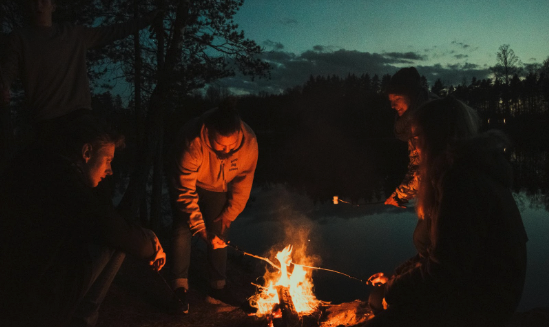
Take your team completely offline for 48–72 hours. No laptops, no Slack—just hiking trails, lakeside conversations, and evening firepits. The lack of digital noise forces a different kind of presence, and teams report it as one of the most restorative formats they've experienced.
The Offsite recommends remote lakeside lodges or mountain retreats for 15–40 people.
3. Hackathon or Innovation Sprint
Give your team 24–48 hours to build, prototype, or solve something real. Cross-functional teams form around pitched ideas, then race to create working demos. This isn't just for engineers—ops can redesign processes, marketing can prototype campaigns. Winning ideas often get implemented post-offsite.
The Offsite recommends 20–100 people for product, ops, or cross-functional teams.
4. Creative Workshop Series
Pottery wheels, improv comedy, printmaking, cooking classes—creative activities unlock new sides of people and dissolve hierarchy. When your CMO is centering clay or your engineer is improvising a scene, everyone's a beginner together. The conversations during creative work are often more honest than structured exercises.
The Offsite recommends half-day workshops for 10–50 people.
5. Culture Mapping & Team Storytelling
Help your team define what your culture actually is through guided exercises where people map significant moments, share origin stories, and identify unwritten rules. Small groups work through prompts, then present their maps. By the end, you've co-created a clearer picture of who you are.
The Offsite recommends 15–60 people—especially powerful for teams in transition or fast growth.
6. "Choose Your Adventure" Day
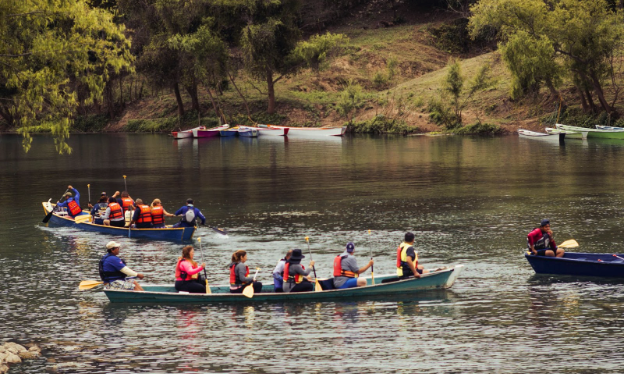
Offer 4–6 activity options—nature hikes, spa sessions, cooking classes, kayaking, quiet reading time—and let people self-select. Groups form around shared interests, introverts get permission to recharge solo, and everyone reconvenes for dinner to share highlights.
The Offsite recommends 20–100+ people and an afternoon or full-day block.
7. Local Impact Challenge
Partner with a local nonprofit for a half-day service project—trail restoration, food bank volunteering, community building. Doing meaningful work together shifts team energy and sparks conversations about values. Working side by side with no laptops reveals character in ways traditional activities don't.
The Offsite recommends a half-day for 15–80 people.
8. International Meet-in-the-Middle
For globally distributed teams, pick a neutral city that's exciting for everyone—Lisbon, Mexico City, Barcelona, Tokyo. Half the offsite becomes cultural exploration: food tours, neighborhood walks, cooking classes. The shared travel experience becomes stories your team references for years.
The Offsite recommends 10–50 people, 3–5 days minimum.
9. Game Design Tournament
Split into small teams and create an original game from scratch—board game, card game, physical challenge. Teams get 2–3 hours to brainstorm, prototype, and test, then everyone plays each other's creations. The best games often become part of your team culture.
The Offsite recommends 20–60 people and an afternoon session.
10. Group Sound Bath & Meditation
Start your offsite with a guided sound bath or meditation. Crystal bowls, gongs, and ambient sound help teams transition out of work mode into presence. Even skeptics usually come around, and the shared stillness sets a more grounded, intentional tone for everything that follows.
The Offsite recommends morning sessions for 10–100+ people, 30–45 minutes.
11. Fireside Feedback Circles
End each day with small-group reflections (5–8 people). Simple prompts: "What surprised you today?" "What are you grateful for?" Give people space to share appreciations and insights without solving anything. These circles build trust faster than almost any other format.
The Offsite recommends for an evening ritual of any group size, split into circles of 5–8.
12. Remote Work Rethink Workshop
Examine how you actually work—meeting cadence, communication tools, decision-making, async norms. Small groups identify what's working and what's not, then collaboratively redesign your operating system. Let the people doing the work redesign the workflows.
The Offsite recommends a half-day to full-day for 15–60 people.
What Actually Makes Team Offsites Stick
Most offsites fail because they're either over-programmed or under-structured. The best ones balance intentional design with space to breathe. Here's what separates memorable offsites from forgettable ones:
Start with clear outcomes, not activities. Don't plan a ropes course because it sounds fun—decide what you're trying to build (trust, alignment, creative thinking) and design backward from there.
Protect unstructured time. The conversations that happen during coffee breaks, evening walks, or late-night hotel lobby hangs often matter more than the scheduled sessions. Build 30–40% unstructured time into your agenda.
Make travel logistics invisible. If people are stressed about flights, shuttles, or check-in, they're not present. Handle ground transportation, provide clear arrival instructions, and eliminate decision fatigue wherever possible.
End with commitments, not just feelings. Great offsites close with clear next steps—what changes when you return? Who owns what? Without follow-through, even the best offsite becomes a nice memory that doesn't move the business.
Measure what matters after. Send a pulse survey 2–4 weeks post-offsite. Ask what's changed in how people work together, what they remember most, and what they'd do differently next time. Use that data to improve the next one.
Let’s Plan Your Retreat—Without the Headache
When retreat planning starts to eat up your bandwidth, we step in to take it off your plate. The Offsite helps companies create unforgettable, smooth-running retreats that teams actually look forward to. With 300+ successful events under our belt and an industry-leading rebooking rate, we’ve earned our reputation by doing one thing really well—caring more than anyone else.
We design offsites for all types of teams, sizes, and goals. Whether you’re planning a big company-wide reset or a small team-building escape, we’ll handle the entire experience from the first brainstorm to final farewell.
Dedicated Retreat Producer—One experienced point of contact manages every detail from contract negotiation to final departure. No juggling multiple vendors or chasing down invoices.
All-Inclusive Budget—One flat fee covers venues, meals, transportation, activities, and coordination. We build in a 10–15% contingency upfront so you have room to elevate experiences without budget panic.
Live Budget Tracking—We monitor costs daily and flag anything that needs your input before it becomes a problem. Most clients end offsites under budget because we catch inefficiencies early.
Curated Venue Database—Access to 1,000+ vetted properties across 50+ countries. We match venues to your goals, team size, and vibe—whether that's a forest lodge, coastal resort, or urban creative space.
Custom Team Building—We design activities based on what you're trying to accomplish—trust-building, creative problem-solving, and strategic alignment. No generic icebreakers or forced fun.
On-Site Coordination—A team member is physically present throughout your offsite, managing vendor relationships, troubleshooting issues, and ensuring smooth execution so you can focus on your people.
Smart Itinerary Design—We structure days that balance focused work sessions with recharge time. Research shows teams retain more and connect deeper when schedules include built-in breaks and unstructured social time.
Vendor Consolidation Saves Money—By negotiating with venues, caterers, and activity providers as a single entity, we typically drive 15–20% cost savings compared to booking everything separately.
Make the Next Offsite Your Best Yet
The right team offsite ideas energize your people, align your priorities, and turn remote coworkers into something that feels more like a team. Whether you’re gathering for connection, innovation, reflection—or all three—offsites are where real momentum begins.
You’ve got a vision. We’ve got the crew to make it easy, exciting, and fully dialed-in. From the first brainstorm to the final group selfie, The Offsite is your full-service retreat partner. Let’s design something your team will talk about for years. Ready to make your next offsite unforgettable? Reach out today.
Frequently Asked Questions
How far in advance should we plan a team offsite?
Book 3–6 months ahead for most venues, especially if you're targeting spring or fall (peak offsite seasons). Popular locations like mountain lodges, lakeside retreats, and coastal properties fill up quickly. If you're coordinating international travel, need 50+ rooms, or want a specific high-demand venue, add even more lead time. Last-minute bookings (under 60 days) severely limit your options and often mean settling for less ideal locations or higher costs.
What's a realistic budget per person for a team offsite?
Expect to spend in the mid-range per person for a 2–3 day domestic offsite including lodging, meals, activities, and ground transport. International offsites or luxury venues will cost more. Budget in a 10–15% contingency for upgrades, last-minute additions, or unexpected opportunities. Working with a retreat planner typically saves 15–20% compared to booking everything separately because we negotiate better vendor rates and catch inefficiencies early.
How do we make offsites inclusive for introverts?
Offer activity choice wherever possible—group hikes vs. solo spa time, collaborative workshops vs. independent reflection periods. Keep discussion groups small (5–8 people max) rather than forcing whole-team conversations. Build in quiet hours between sessions where people can decompress alone. Avoid forcing participation in high-energy activities like karaoke or improv unless people genuinely opt in. The best offsites let people recharge in ways that work for them, not just the loudest voices in the room.
Should we mix work sessions with fun activities?
Yes, but don't over-schedule. A strong daily rhythm is: focused morning session (90–120 min), midday activity or free time, afternoon workshop or team building, evening social with no agenda. Avoid back-to-back sessions for 8+ hours—cognitive retention drops dramatically and people mentally check out. Research shows teams retain more and connect deeper when schedules include built-in breaks and unstructured social time. The informal conversations during downtime often produce better outcomes than scheduled sessions.
What if some team members can't attend?
Offer virtual participation for key strategic sessions if possible, but don't try to make the entire offsite hybrid—it rarely works well and diminishes the experience for both in-person and remote attendees. Instead, record important moments, share photos and updates in real-time via Slack or email, and do a comprehensive debrief presentation when everyone's back. Consider planning a second, smaller gathering later for those who missed it rather than splitting focus during the main event.
Does The Offsite work with small teams or just large companies?
Both. We've planned offsites for 10-person startups and 300-person companies. Our model scales—you get the same dedicated Retreat Producer, budget tracking, and planning support regardless of team size. Smaller offsites often allow for more intimate venues and personalized experiences, while larger ones benefit from our vendor relationships and logistics expertise. The approach adjusts to fit your team, not the other way around.