
Team Building for Sales Teams: Competitive and Collaborative Activities
Sales team building activities need to match the pace and intensity of the people in the room—fast-moving, competitive, and sharp enough to keep high performers engaged. The best formats strengthen communication under pressure, create shared wins that build trust, and reset energy without killing momentum.
The challenge is execution. Running competitive activities that energize rather than embarrass, facilitating without slowing the pace, and coordinating logistics while staying focused on your team—that's where most in-house attempts fall apart.
The Offsite Co. handles all of it for sales teams specifically: activity design that matches sales intensity, venue sourcing that supports both strategy sessions and celebrations, and full coordination so you show up as a leader, not a logistics coordinator. If you’re ready to plan something your team will remember, reach out for a free consultation and let's build it together.
Why Sales Teams Need Different Team Building
Sales teams operate under pressure most departments never experience—public performance tracking, quarterly quota resets, rejection as daily routine, and comp structures that create internal competition alongside collaboration. Generic team building designed for stable, low-stakes environments doesn't work. Activities that ask sales reps to "open up" or "be vulnerable" in trust-building exercises often backfire with teams conditioned to project confidence and close deals.
What Actually Resonates
Sales teams respond to formats that mirror their work reality: time pressure, clear win conditions, immediate feedback, and opportunities to demonstrate skill. The best activities channel competitive energy productively rather than trying to suppress it. They create space for collaboration without forcing it through artificial scenarios that feel disconnected from actual sales dynamics.
Key elements that land:
➔ Skill application—Activities that sharpen objection handling, pitch delivery, or strategic thinking transfer directly to quota attainment
➔ Peer learning—Watching top performers work through scenarios teaches more than any training deck
➔ Recognition that feels earned—Clear judging criteria and authentic celebration of real skill, not just participation
Short, high-intensity sessions outperform day-long workshops. Role-play formats deliver more value than generic problem-solving exercises. The teams seeing the strongest results aren't softening their competitive edge—they're sharpening it while building the trust and communication patterns that make collaboration possible when deals require it.
10 Ways to Keep Sales Teams Engaged and Aligned
Sales team building activities should match the pace, energy, and ambition of the people in the room. Whether you’re prepping for a big quarter or looking to sharpen instincts, these formats help teams compete, collaborate, and grow without slowing down.
1. Pitch Roulette
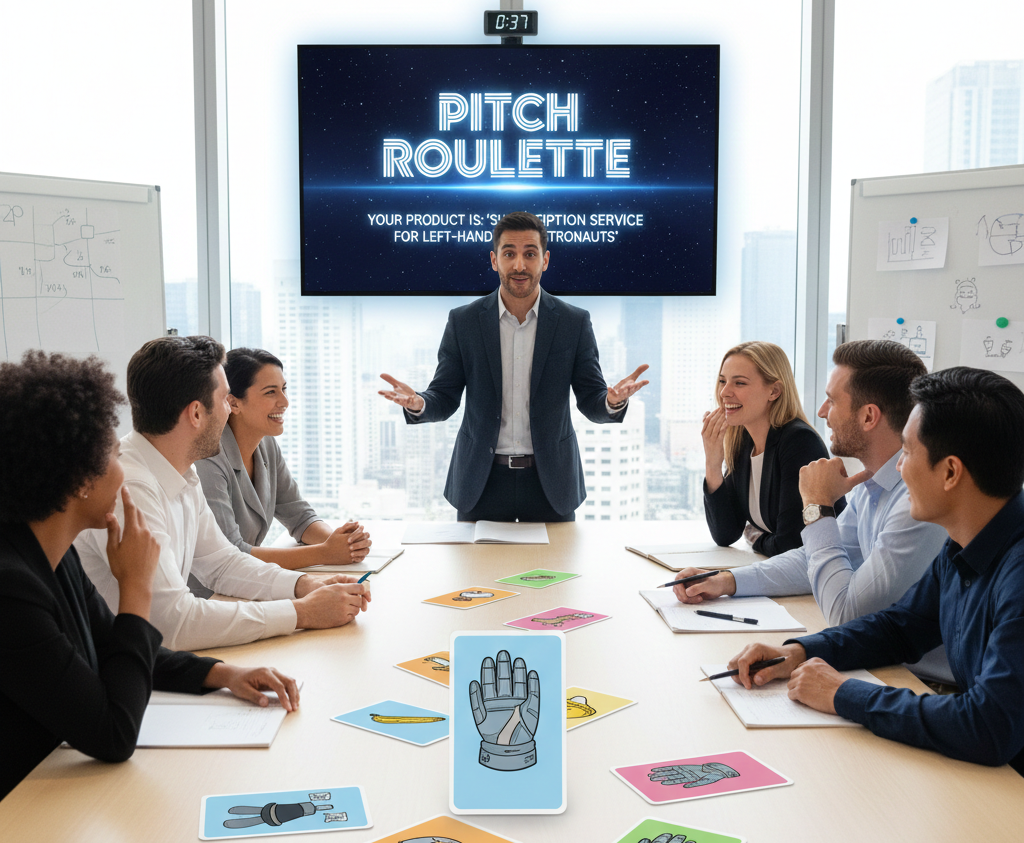
Each rep draws a random product—real or ridiculous—and delivers a 60-second pitch on the spot. Could be staplers, pet rocks, or subscription services for left-handed astronauts. No prep time, just improvisation and presence. After each pitch, the group votes on clarity, creativity, and persuasiveness.
What makes it land:
Removes perfectionism—the absurdity gives permission to experiment without stakes.
Sharpens the skills reps use daily: thinking on their feet, reading the room, closing with confidence.
Creates energy fast—laughter breaks down walls and loosens up even the most buttoned-up teams.
Recommended for: Kickoffs, training sessions, or any gathering where energy needs a quick boost.
2. Objection Handling Face-Off
Pair up and trade tough objections back and forth—pricing concerns, competitor comparisons, timing pushback, feature gaps. Each rep gets 30-60 seconds to respond before their partner throws the next curveball. Rotate partners every few rounds to expose reps to different styles and approaches.
Why it sharpens skills:
Turns pressure into practice—reps build muscle memory for staying calm when prospects push back.
Surfaces language that actually works, not just what's in the sales deck.
Builds confidence through repetition in a low-stakes environment where failure costs nothing.
Recommended for: Teams onboarding new reps, refining messaging, or preparing for high-stakes quarters
3. Revenue Relay
Teams race through the full sales funnel in stages—prospecting, discovery, demo, objection handling, and close. Each stage is timed, and different team members handle different phases based on their strengths. Points are awarded for speed, accuracy, and collaboration across handoffs.
How this builds alignment:
Highlights how each role contributes to revenue—SDRs see what happens after they book meetings, AEs understand pre-qualification impact.
Exposes bottlenecks in real processes through simulated pressure.
Rewards teamwork over individual heroics, reinforcing that deals move faster with clean handoffs.
Recommended for: Cross-functional sales teams, SKOs, or quarters focused on improving conversion rates
4. The Close-Off
Everyone pitches the same product to a mock buyer—usually a manager, executive, or invited external judge. Reps get 5 minutes to present, then face 2-3 minutes of questions and objections. The judge scores on delivery, handling of pushback, and ability to create urgency without desperation.
Why top performers love this:
Showcases talent in front of leadership—high performers get visibility, newer reps learn by watching.
Creates healthy competition that mirrors real quota pressure without actual financial stakes.
Forces message refinement—hearing 8 versions of the same pitch reveals which language lands.
Recommended for: End-of-quarter celebrations, leadership development programs, or competitive teams craving recognition
5. Rapid Response Roleplay

Drop teams into a fast-moving sales scenario with incomplete information and shifting conditions. They have 5 minutes to strategize, then 10 minutes to execute—qualifying the prospect, handling curveballs, and attempting to close. Facilitators introduce new complications mid-pitch to test adaptability.
What makes it effective:
Simulates the real-deal chaos—budget cuts, stakeholder changes, surprise competitor intel.
Tests strategic thinking and improvisation simultaneously under realistic time pressure.
Builds trust—teams learn who stays calm, who asks good questions, who thinks three steps ahead.
Recommended for: Enterprise sales teams, high-velocity environments, or groups preparing for complex deal cycles
6. Win Stories Showdown
Each rep shares their favorite close story in 3 minutes—the deal that almost died, the unexpected objection they turned around, the prospect nobody thought would convert. The group votes on the story that taught them the most, made them laugh the hardest, or best demonstrated the team's values.
Why this creates connection:
Surfaces real tactics and language that worked in actual deals, not theoretical training scenarios.
Builds culture through shared celebration—teams remember stories, not quota numbers.
Gives newer reps context on what "good" looks like without formal case studies.
Recommended for: Quarterly business reviews, team offsites, or moments when morale needs a boost through recognition
7. Sales Bingo
Create bingo cards with daily or weekly sales milestones—send a video pitch, land a referral, book three discovery calls, overcome a pricing objection, close a deal above $X. Reps mark progress throughout the week, and first to complete a row or full card wins recognition or small prizes.
How this drives behavior:
Gamifies activities that move deals forward without adding meetings or admin work.
Encourages consistency—daily action beats sporadic heroics for pipeline health.
Creates friendly competition that doesn't pit reps directly against each other's quota numbers.
Recommended for: Slow quarters, new product launches, or teams struggling with activity consistency
8. Team Demo Challenge
Small groups (3-4 reps) collaborate to build and deliver a custom product demo in 30 minutes. Judges score on clarity, storytelling, handling of objections, and how well they personalized to a mock prospect's needs. Groups typically include different roles—SDR, AE, SE—forcing collaboration across typical silos.
Why cross-functional teams benefit:
Breaks down role barriers—everyone sees how their piece fits into the full buyer journey.
Improves demo quality through peer feedback and varied perspectives.
Rewards collaboration over individual brilliance, reinforcing that complex deals require teamwork.
Recommended for: Enterprise teams, product launch training, or organizations struggling with handoff quality
9. Memory Close
Read a detailed client brief aloud—company background, pain points, stakeholders, budget constraints, timeline, success criteria. After a 5-minute break with no notes allowed, teams reconstruct the brief and deliver a pitch based purely on what they remembered. Judges score on accuracy, prioritization, and personalization.
What this reveals:
Tests active listening and retention under pressure—skills that separate top performers from average ones.
Forces prioritization—teams learn which details actually matter for closing versus noise.
Builds empathy—remembering specific pain points creates better discovery and tailored solutions.
Recommended for: Discovery skill development, enterprise sales training, or teams who rush through qualification
10. Deal-Maker's Trivia
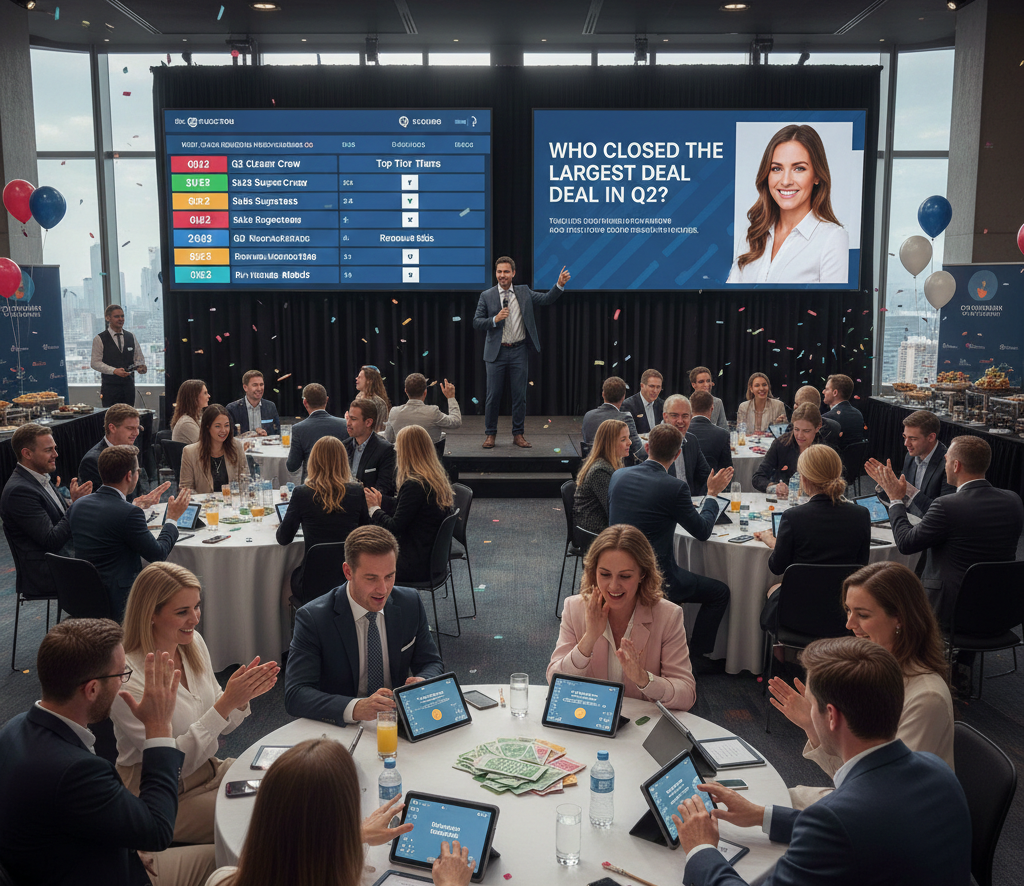
Fast-paced trivia covering company history, past wins, product knowledge, funny team moments, and industry facts. Mix serious questions ("What's our average deal cycle?") with personality-driven ones ("Who closed the largest deal in Q2?"). Keep the scoring visible and the pace aggressive—no time for overthinking.
Why this strengthens culture:
Celebrates institutional knowledge—long-tenured reps shine, newer ones learn team history.
Reinforces product expertise through competition rather than required training.
Creates inside jokes and shared references that become team identity markers.
Recommended for: SKOs, quarterly celebrations, team offsites, or any moment when culture needs reinforcement through recognition
Strategic Timing for Sales Team Building
Even the best team-building needs the right moment to land. Sales teams run on momentum, so the most impactful sessions are the ones that show up with purpose. The timing matters—when it’s aligned with what the team actually needs, team building hits harder, sticks longer, and fuels the next big push.
What Sales Teams Get When They Partner With Us
Sales teams move fast, think sharp, and aim high—so their retreats need to do the same. At The Offsite, we build high-energy, high-impact experiences that match the pace of top-performing teams.
We design full retreats built for clarity, connection, and serious momentum. From custom venues to seamless logistics, everything is shaped around how sales teams actually operate: quick, focused, and goal-driven.
Why Sales Leaders Work with The Offsite
At The Offsite, we build every retreat from the ground up—tailored to your team’s rhythm, goals, and culture. Whether you're launching the year, resetting mid-quarter, or celebrating a win, we create experiences that match the moment and move your team forward. We don’t drop in a one-size-fits-all agenda. We design with intent—and we make sure your team walks away stronger, sharper, and more connected.
What We Deliver
We bring high-impact structure, smart strategy, and full-service support to every sales retreat:
Retreats that match your energy – Fast-paced, focused, and aligned to your sales goals
Custom team-building – Experiences that are fun, meaningful, and performance-driven
Top-tier venue sourcing – Commission-free access to our national, hand-picked network
End-to-end planning – Flat-fee model, full agenda design, travel logistics, and on-site staff
Real-time budget visibility – No surprises, just smart tracking and clear reporting
Where Sales Strategy Meets Real Connection
Sales team building activities create space for the focus, alignment, and momentum high-performing teams need to stay sharp. When designed with intention, these sessions strengthen communication under pressure, channel competitive energy productively, and build trust without slowing the pace.
We've maintained a 97% client return rate planning sales team retreats because we understand what drives performance—as well as what kills it. From kickoff to close, we handle logistics, activity design, and on-site execution so your team shows up ready to engage, not burned out from coordination. Ready to plan a retreat that matches your team's intensity? Let's get started.
Frequently Asked Questions
What makes team building effective for sales teams specifically?
Sales teams respond to activities that mirror their actual work—time pressure, clear win conditions, skill application, and competition with structure. Generic trust-building exercises designed for stable environments often backfire with teams conditioned to project confidence and close deals. Effective formats channel competitive energy productively (pitch competitions, objection handling face-offs) rather than trying to suppress it through forced vulnerability exercises.
How often should sales teams do team building activities?
Monthly short sessions (30-60 minutes) build stronger patterns than quarterly all-day workshops. Consistency matters more than total time invested—teams running regular touchpoints report better communication and collaboration than those doing annual retreats with nothing between. Ideal timing: before new quarters for alignment, after big wins for celebration, during onboarding for faster integration, and at SKOs to balance content with connection.
What team building activities work best for competitive sales environments?
Pitch roulette, objection handling face-offs, and revenue relays work well because they reward actual sales skills under realistic pressure. The close-off and win stories showdown provide recognition opportunities that competitive teams crave. Avoid activities that eliminate competition entirely—sales teams need formats that channel their natural drive productively, not suppress it.
The Offsite Co. designs activities specifically for sales team dynamics, balancing healthy competition with collaboration that actually strengthens performance.
How do you measure ROI on sales team building?
Track participation rates, voluntary contributions in team meetings, win rates in the quarter following activities, and retention of top performers. Qualitative signals: reps sharing strategies unprompted, asking when the next session is, or applying techniques learned during activities to actual deals. Strong team building shows up in pipeline health, deal velocity, and how quickly new reps ramp to quota.
Can team building activities improve sales performance directly?
Yes, when they sharpen actual skills. Objection handling practice builds confidence that translates to real calls. Pitch competitions refine messaging and delivery. Role-play scenarios improve strategic thinking under pressure. The key is designing activities that transfer directly to quota attainment rather than generic exercises with no clear connection to revenue generation.
Does The Offsite Co. work with sales teams at different stages?
Yes. We plan retreats for early-stage startups establishing sales culture, mid-market companies scaling teams rapidly, and enterprise organizations running multi-day SKOs. Activities and formats adjust based on team maturity—newer teams need more skill-building and culture formation, established teams benefit more from advanced strategy work and peer learning formats.
What's the ideal group size for sales team building activities?
Small groups (4-8) work best for skill-intensive formats like objection handling and roleplay. Larger groups (20-50+) suit competitive formats like trivia, pitch competitions, and win story showcases. For teams over 50, breakout sessions maintain engagement—run simultaneous activities with different facilitators, then reconvene for recognition and debrief.