
Team Retreat Ideas from Adventure to Mindfulness
Team retreats either create lasting connections or become expensive exercises in forced fun that everyone politely endures. The difference comes down to whether the experience matches what your team actually needs—not what looks good in the planning deck. Some teams need adrenaline and adventure to break through silos. Others need quiet space to recover from burnout before they can think about bonding.
That's where The Offsite starts—figuring out what your team actually needs, then building the retreat around that reality instead of a template. Whether you're trying to rebuild trust after a tough quarter, energize a remote team that's never met in person, or give your people space to actually recharge, we design the experience that delivers. We handle everything, from venue sourcing, itinerary design, logistics, and on-site coordination so you can stop juggling spreadsheets and actually participate in the retreat you're planning.
How to Pick a Retreat Format That Actually Fits Your Team
Most retreat planning starts backward—someone picks a venue because it looks good on Instagram, then tries to force the team's needs into whatever activities the property offers. The result is a generic experience that checks boxes without creating impact.
The format should follow function. A burned-out team doesn't need a ropes course—they need space to breathe before they can think about bonding. A newly merged team doesn't need meditation circles—they need shared challenges that build trust fast.
Match the format to the current team state:
High-growth chaos: Teams scaling fast need retreats that slow the pace and create space for strategic thinking before the next sprint hits
Post-layoff or reorg: People need restoration and psychological safety before they're ready for vulnerable team-building exercises
New team formation: Shared adventures build trust faster than workshops when people don't know each other yet
Remote team disconnect: Groups that only interact on Zoom need informal, unstructured time as much as they need structured sessions
Creative burnout: Teams stuck in incremental thinking need experiential activities that unlock different parts of their brains
Energy level matters as much as content. Adventure-heavy formats generate momentum and break people out of comfort zones. Mindfulness-focused retreats create clarity and help teams reset. Hybrid approaches work when you need both—but trying to do everything usually means nothing lands with real impact.
The best retreat formats feel natural to your team's rhythm, not borrowed from someone else's playbook. When the style matches the moment, the outcomes follow.
Adventure, Mindfulness, and Strategy: Retreat Ideas That Work
To help you skip the trial and error, we’ve pulled together eight retreat ideas that work across different team dynamics. From high-energy adventure crews to teams in need of mindfulness, these formats offer fresh approaches that meet your people where they are.
1. The Great Outdoors Challenge
Who it's for: Adventure-focused retreats work best for teams stuck in their heads—engineers, analysts, strategists who spend all day problem-solving in spreadsheets. Physical challenges like hiking, rock climbing, or white-water rafting force different kinds of collaboration. There's no job title on a climbing wall, just people helping each other reach the top.
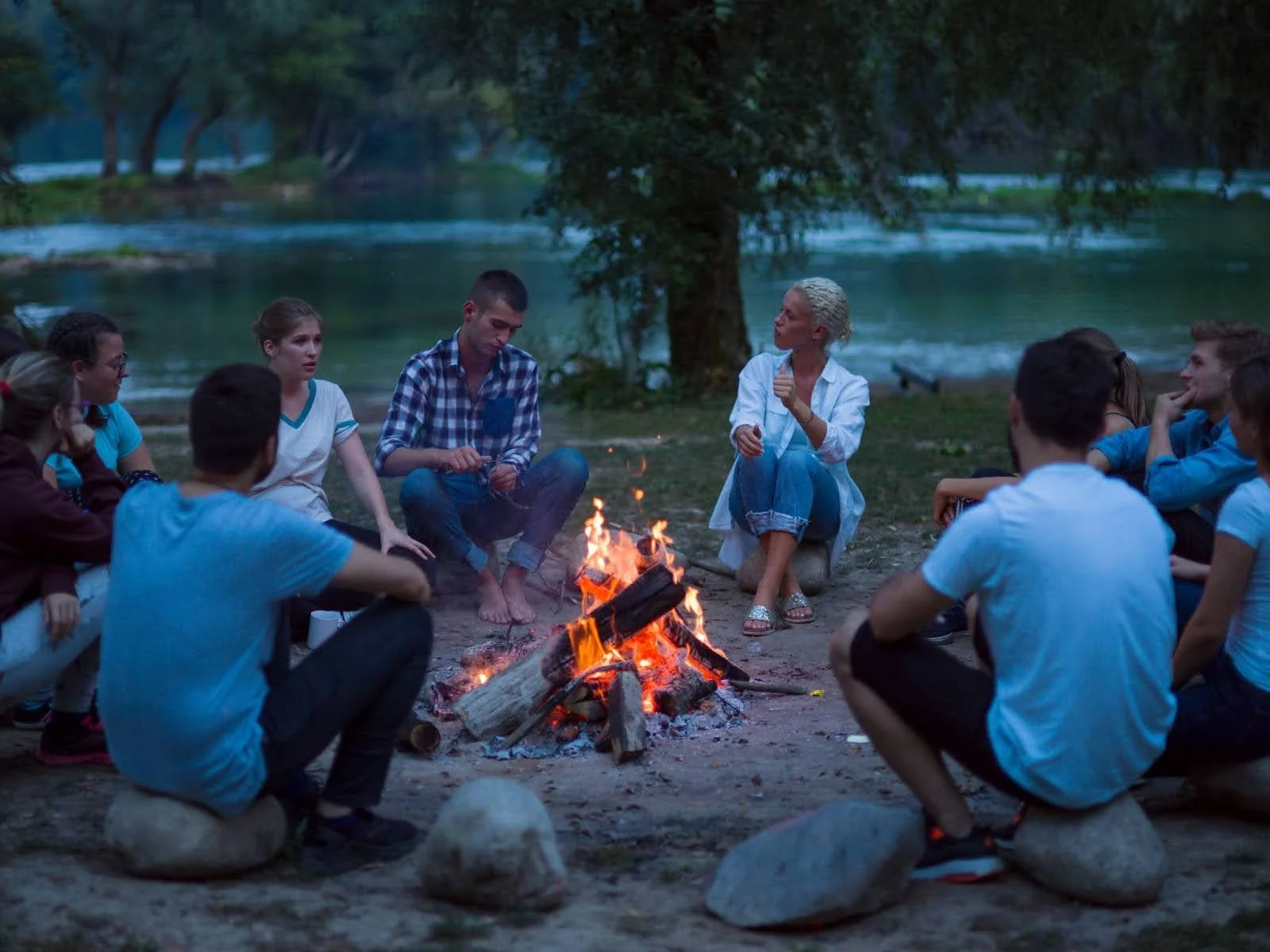
What makes it work: The key is pairing high-energy activities with structured debrief sessions. What did it feel like when someone helped you over that obstacle? How did the team make decisions under pressure? These conversations turn physical experiences into insights that carry back to the office. Evening campfires or reflection circles help teams process what they learned while adrenaline is still fresh.
Best for: Teams with strong silos, new cross-functional groups, or people who've been remote too long and need shared experiences to bond over

2. Digital Detox + Creative Sprint
The problem it solves: Remote teams live inside their screens, which slowly kills the spontaneous creativity that happens when people can actually think without notifications. A digital detox retreat creates space for analog brainstorming—whiteboards, sticky notes, and long walks where ideas surface naturally instead of being forced in back-to-back Zooms.
How to structure it: Declare a no-laptop policy (collect devices at check-in if you need to) and design workshops around tangible materials. Build prototypes with cardboard. Sketch user flows on butcher paper. The constraint of being offline forces people to think differently, and the lack of distractions means conversations go deeper than they ever do on Slack.
Best for: Product teams stuck in incremental thinking, creative teams experiencing burnout, or distributed teams that need to rebuild spontaneous collaboration
3. The Strategy & Spa Retreat
Why it works for leaders: Leadership teams and senior executives don't need more time in conference rooms—they need environments where strategic thinking and restoration coexist. Mornings focus on the hard stuff: vision alignment, tough decisions, organizational restructuring. Afternoons shift to spa treatments, massages, or quiet time by the pool where insights from the morning can actually settle.
The luxury element matters: The high-end experience isn't indulgence—it's creating conditions where leaders can think clearly without stress clouding judgment. Pair strategy sessions with exceptional food and wine, and suddenly the informal dinner conversations become as valuable as the scheduled workshops. This format recognizes that executives make better decisions when they're not running on fumes.
Best for: C-suite teams planning major pivots, boards working through governance challenges, or senior leadership recovering from high-pressure periods
4. Mindfulness & Movement
What burnout needs: Burnout doesn't respond to pep talks—it requires genuine restoration. This retreat format prioritizes slowing down through guided meditation, breathwork, yoga, and forest bathing. The goal isn't relaxation for its own sake; it's giving people the nervous system reset they need before they can engage meaningfully with strategy or team building.
Daily rhythm: Structure the days with morning movement (yoga or walking meditation), midday workshops on stress management or resilience, and afternoon solo time for journaling or nature walks. Evening reflection circles help people share what's surfacing without pressure to "fix" anything. Teams leave grounded, with practical tools for managing stress that extend beyond the retreat.
Best for: Teams recovering from layoffs, reorgs, or intense growth periods where people are visibly exhausted and need restoration before they can reconnect
5. Adventure + Alignment
Building trust fast: New teams or early-stage startups need trust quickly, and shared challenges build it faster than any workshop. Obstacle courses, ziplines, or kayaking create natural moments where people depend on each other—and those experiences become the foundation for future collaboration when pressure hits.
Weaving in the work: The key is connecting alignment work to the adventure. After the morning zipline course, run a session on core values and how the team showed up for each other. Follow the afternoon kayaking with a workshop on communication under pressure. The physical experiences give people concrete moments to reference when discussing how they want to work together.
Best for: Early-stage startups, newly formed teams, or groups that need to build trust and alignment simultaneously without it feeling forced
6. Wellness + Personal Development
Whole-human support: More companies are recognizing that when individuals thrive, teams thrive. This retreat format combines nutrition workshops, one-on-one coaching sessions, fitness classes, and bodywork designed to support mind and body together. It's less about team bonding and more about equipping people with tools for sustainable performance.
Individual focus, team benefit: Sessions might include financial wellness planning, sleep optimization workshops, or guided goal-setting for personal and professional growth. The retreat acknowledges that people bring their whole selves to work, and investing in personal development creates ripple effects across team performance.
Best for: Companies serious about retention and well-being, teams with high individual contributors who need personal growth opportunities, or organizations wanting to differentiate through genuine people investment
7. Art & Storytelling Retreat
Creative fuel: Creative teams need outlets that feed imagination, not just drain it. This retreat swaps spreadsheets for paintbrushes and PowerPoints for storytelling. Teams might collaborate on a mural, learn visual storytelling techniques, or shoot short-form videos that stretch creative muscles in new directions.
Tying it back: Pair the creative activities with brand storytelling sessions to connect the play back to the company mission. Have teams create visual representations of product roadmaps or storyboard customer journeys. The creative exercises become both energizing and strategically useful, leaving teams aligned on narrative while feeling creatively recharged.
Best for: Marketing teams, design groups, content creators, or any team where creativity is core to the work and needs intentional refueling
8. Cozy Cabin & Deep Dives
Intimacy for remote teams: For remote teams who haven't spent much time in person, a cozy cabin setting invites real conversation. Fireplace chats, cooking meals together, and long-form workshops that don't feel rushed create the conditions for trust that video calls can't replicate.
Going deep: Add conflict resolution exercises, origin-story sharing, or working agreement workshops. The intimate setting makes it safe to address tensions or misalignments that have been festering in Slack threads. Teams leave with stronger connections and a renewed sense of being "in it together" rather than just coworkers in different time zones.
Best for: Fully remote teams meeting for the first time, distributed leadership groups, or teams that need to address unspoken tensions in a safe, contained environment
How The Offsite Designs Retreats That Teams Actually Remember
Planning a retreat that blends strategy, team bonding, and a splash of fun can quickly spiral into a logistical circus. Flights, RSVPs, dietary needs, meeting agendas, activity bookings—the list multiplies fast. What starts as a great idea often turns into someone’s second full-time job. That’s where The Offsite steps in. We handle the moving parts and transform the process into something seamless, so the retreat feels energizing instead of exhausting.
Retreats Built with Intention
Every retreat we design begins with purpose. What’s the outcome you want—alignment, celebration, connection, creativity? Once that’s clear, we shape the retreat around it. That means understanding your team’s needs, choosing the right format, and weaving together experiences that balance strategy and downtime.
Maybe your group craves outdoor adventure. Maybe they need wellness and reflection. Maybe they want a mix of both. Whatever the focus, we design an itinerary that feels natural, thoughtful, and engaging from the first kickoff to the final toast.
What We Handle for You
We take care of every detail so you don’t have to chase logistics or play air-traffic control. Our process is built to make retreats stress-free and effortless for organizers and participants alike:
Venue sourcing with all logistics wrapped in, from accommodations to meeting space to amenities
Custom itineraries shaped around your culture, goals, and company personality
Team-building and wellness activities selected to spark connection and keep energy high
On-site coordination with our event directors so you get to fully participate, not manage the schedule
From flights to firepits, nothing slips through the cracks. You show up, engage, and enjoy the retreat while we keep everything running smoothly behind the scenes.
We’ve created retreats that help teams reset, celebrate, and connect on a deeper level. Some groups leave with a fresh sense of purpose, others with unforgettable adventures, and many with both. Whatever your goals, we’ll help you deliver an experience your team will actually remember and talk about long after they’re back at their desks.

Make Your Next Retreat the One Everyone Remembers
Team retreat ideas only matter when they’re translated into experiences that recharge energy, deepen relationships, and strengthen culture. From choosing the right style—whether adventure, mindfulness, or a mix—to crafting an agenda that balances strategy with downtime, the best retreats leave teams more connected, motivated, and aligned. A thoughtful approach ensures the investment creates ripple effects long after the retreat ends.
At The Offsite, we design and deliver retreats that feel seamless yet unforgettable. From venue sourcing and itinerary design to team-building, wellness activities, and on-site coordination, we handle every detail with care. Ready to create a retreat that your team will talk about for years? Book your consultation today.
Frequently Asked Questions
What's the right team size for a retreat to actually work?
The sweet spot is 15-40 people. Small enough for real connection, large enough to justify the logistics. Below 10 people, call it an offsite dinner—you don't need a full retreat. Above 60, you're running a conference where most people stay quiet and defer to leadership. If your team is larger, consider running multiple retreats for different departments rather than cramming everyone into one experience that satisfies no one.
How do you balance structure with flexibility in a retreat agenda?
Build 60-70% structure (workshops, activities, meals) and leave 30-40% open for organic connection. Over-scheduling kills the spontaneous conversations that often produce the biggest breakthroughs. White space isn't wasted time—it's where introverts recharge and relationships deepen. If people feel rushed from session to session, the retreat becomes exhausting instead of energizing.
Should adventure and wellness retreats include any work sessions?
Depends on your goals. Pure celebration or recovery retreats can skip the work entirely. But most teams benefit from weaving in 1-2 strategic sessions—vision alignment, quarterly planning, or working agreements. The key is timing: don't put heavy strategy sessions right after a 10-mile hike. Use the retreat energy to fuel important conversations, but don't turn restoration time into a disguised work marathon.
How far in advance do we need to book retreat venues?
Popular properties need 4-6 months minimum, especially for groups over 25 people. Destination retreats (international locations, remote cabins, exclusive estates) often require 9-12 months. Last-minute bookings under 90 days severely limit options and usually mean settling for whatever's available rather than what's ideal. The earlier you start, the better your choices and rates.
What's the biggest mistake teams make planning their own retreats?
Treating it like an extended staff meeting. Loading the agenda with presentations, status updates, and back-to-back sessions kills any chance of real connection or creative thinking. The second biggest mistake is choosing venues based on price alone—a cheap hotel conference room with fluorescent lighting and stale coffee creates an experience people endure, not one they remember. Invest in the environment and leave room for people to actually connect.
How does The Offsite handle dietary restrictions and accessibility needs?
We collect detailed information upfront and coordinate directly with venues to accommodate vegan, gluten-free, kosher, halal, and allergy-specific requirements. For accessibility, we ensure venues have ADA-compliant facilities and work with you to modify activities so everyone can participate meaningfully. These aren't special requests—they're baseline requirements for inclusive retreats that work for your entire team.